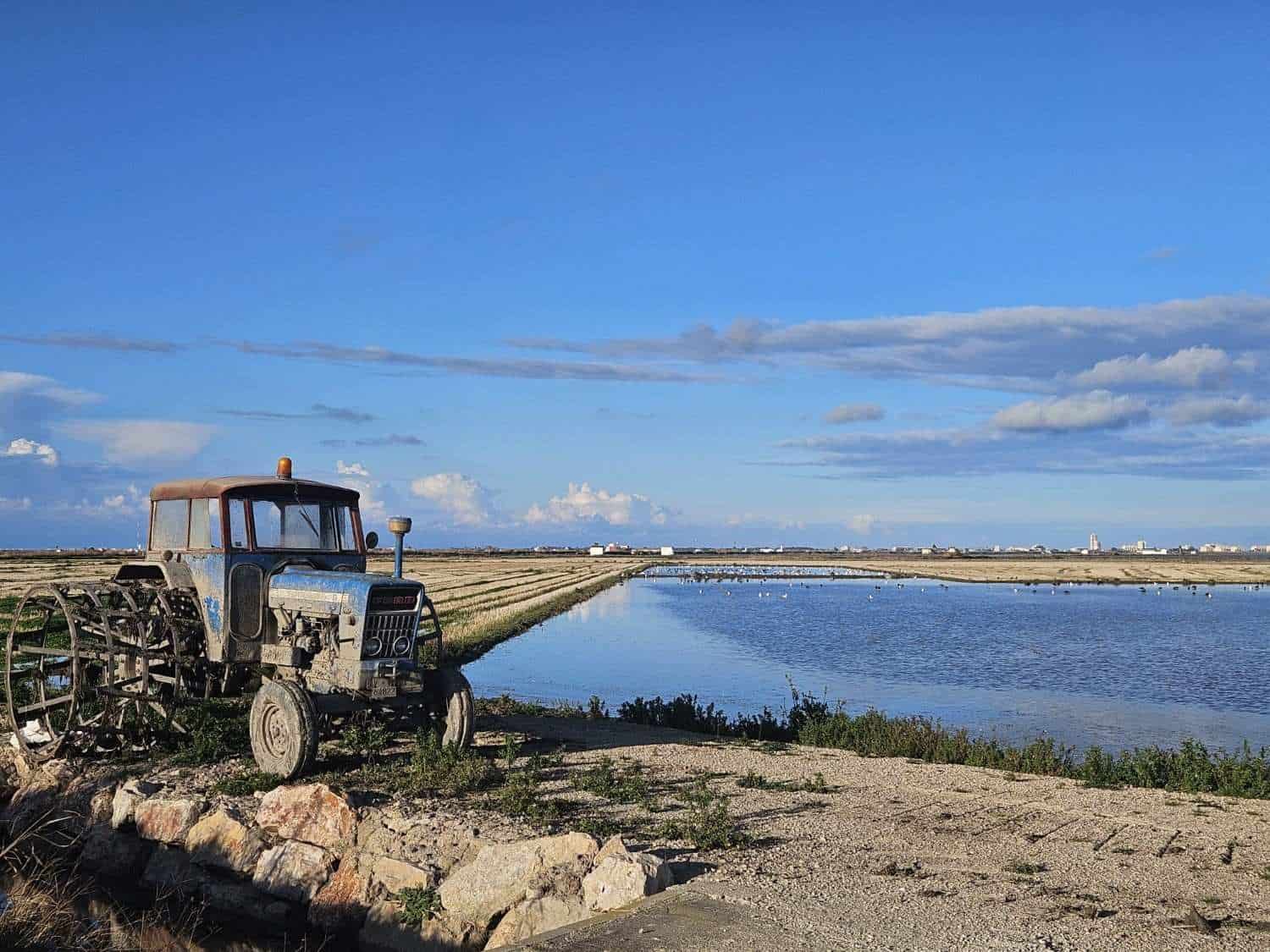
The Lagoon That Fed Valencia Is Running Out of Breath
We’ve been sweating through this heatwave for days now. So has the Albufera — except the lagoon can’t go inside, turn on a fan, and wait it out. And unlike us, it was already run down before this heatwave even started.
Twenty minutes south of the city, the water that gave Valencia its rice, its paella, and arguably its entire sense of what this place is has spent the past week climbing toward crisis levels again. In seven days, water temperature at the lagoon jumped from around 25°C to 28°C.
That number matters more than it sounds like it should: last summer, when the Albufera crossed 30°C, dissolved oxygen collapsed and the lagoon suffered a serious die-off, forcing emergency intervention. Officials are watching the same pattern build again this year.
A body already under stress
The mechanism by which heat kills is almost unfair in its simplicity. During the day, phytoplankton in the water photosynthesize and pump out oxygen. At night, that stops — but everything in the lagoon keeps consuming oxygen: fish, plants, bacteria breaking down organic matter. The hotter the water, the less oxygen it can physically hold, and the faster fish metabolisms burn through what’s left. Heat doesn’t just make the lagoon uncomfortable. It suffocates it, quietly, after dark.
But heat is not the only condition worsening the Albufera.
First, there simply isn’t enough water moving through. As the park’s director, Natxo Lacomba, has pointed out, historically more than five times today’s river flow used to reach the Albufera, before centuries of rice irrigation and agricultural use diverted it elsewhere. Since the lagoon is shallow, it depends on that flow to flush and renew itself several times a year — and less water in means less renewal, means whatever’s already there sits and concentrates. Conservation group Acció Ecologista-Agró has tracked exactly this: between May 1 and July 6 this year, the lagoon’s level sat below the legal minimum reference threshold for 54 of 67 days, over 80% of the time.
Second, what water does arrive isn’t clean. Ongoing wastewater discharges and nutrient runoff from agriculture — nitrogen, phosphorus — act as fertilizer for the lagoon’s algae, feeding blooms large enough to turn the water green instead of clear. That algae doesn’t just cloud the water: like any organic matter, it eventually dies and decomposes, and decomposition consumes oxygen. So the same nutrient overload that colors the lagoon also sets up its own oxygen drain, on top of the organic sludge and decomposing rice straw that’s already settled on the lagoon bed for years. Together, that’s exactly the kind of material that strips oxygen out of the water the moment heat and stagnation give it the chance. It’s the same underlying issue researchers pointed to after hundreds of dead carp turned up floating at the Tancat de la Pipa in spring 2025.
Third, there’s still sediment from the DANA sitting in the system. The October 2024 floods dumped an estimated 120 hm³ of water into the Albufera’s marshes and rice fields in a matter of hours — roughly a year and a half’s worth of normal inflow, arriving in one violent afternoon — along with a heavy load of mud, debris, and pollutants. Some of that sediment load never fully left the system, and it’s now part of the same organic mass quietly consuming oxygen every time the water heats up.
What’s actually at stake
The Albufera is a working landscape: a wetland that filters its own water through rice paddies, hosts migratory birds by the thousands, and has even written the rules for Valencian food for centuries.
A working landscape only keeps working as long as it survives. Lose the Albufera, and you don’t just lose a nature reserve; you lose everything that comes with it: the water, the rice fields (maybe even paella!), the birds, the fishing traditions, and the whole chain of things that makes this city recognizably itself.
The heat we’re feeling this week isn’t just a headline about a hot summer — it’s also quietly deciding whether Valencia’s most essential piece of geography makes it through this one intact.