The Battle of Flowers Was Never Really About the Flowers
La Gran Fira de Valencia has already started, with a series of concerts, activities, and fireworks shows going on around the city — designed since its very beginning to distract Valencians from the unforgiving summer heat. The closing event of the fair will land on the last Sunday of the month with the beloved Battle of the Flowers (Batalla de las Flores), a parade where, once again, the falleras will take over as they engage in a magnificent (yet painful?) flower fight.
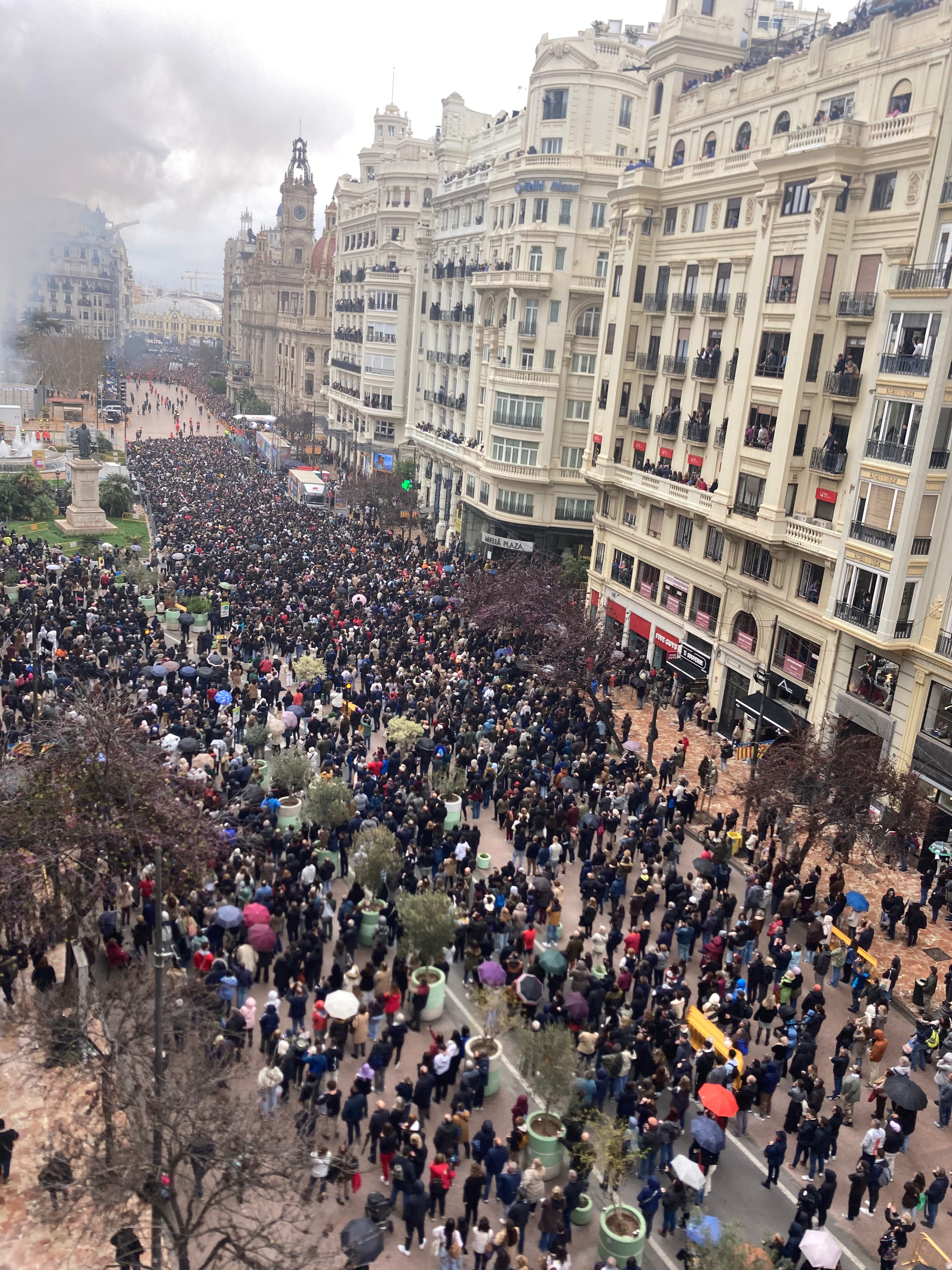
Thousands of carnations fly in both directions at once, with people on the floats using tennis rackets or shields to deflect what comes back at them from the audience. The sight is truly one of those once-in-a-lifetime kind of events.
How did people come up with the idea? Not very differently from why we post on social media today: to be seen, and especially to be seen by the right audience.
Not humble beginnings.
It all started when the Baron of Cortes de Pallàs, Pasqual Frígola Ahís Xacmar i Beltrán, had a very nice trip to Nice in 1876. There he witnessed a staged flower battle that was part of its Carnival. It was a fantastic show of carriages, blooms, and great folly and jolly; he liked it enough to import the idea wholesale. In 1891, he staged Valencia’s own version on the Paseo de la Alameda, making it the second city in the world, and the first in Spain, to do it.
What he actually built, though, wasn’t a folk tradition. It was a runway.
The earliest editions of the Batalla de Flores were, by design, exclusive. Valencia’s bourgeoisie and aristocracy paraded their carriages, their horses, and each other down the Alameda — not for the crowd, but for one another.
The competition wasn’t really about flowers at all: it was about whose carriage was more elegant, whose horses were better turned out, whose household could afford to do this properly. Servants supplied the flowers; their employers did the throwing. The flowers were just the medium. The message was status.
How the Batalla de Flores lost its elite
Through the early twentieth century, the event stayed prestigious enough to attract royal attention (Alfonso XIII’s name ended up on a top prize; so did the Infanta Isabel’s), but it was really from the 1930s onward that the city itself — the Ayuntamiento and the comisiones falleras — took over running it.
In time, the private carriages of the elite gave way to floats built by fallero artists and coches ligeros dressed by local florists — carrying Valencia’s fallera commissions, visiting festival queens from Castellón and Alicante, and, in a nice bit of historical continuity, the Ateneo Mercantil, a 19th-century social club that still enters its own carriage every year.
Those heavily decorated floats we see today became a craft object rather than a class signal — designed, built, and crewed by people from the neighborhood commission it represents.
What’s left of the old hierarchy
The old split between those who paraded and those who watched is less rigid nowadays. However, the Ayuntamiento still runs a system of palcos — reserved grandstand seating along the route, allocated through a lottery and subsequent sale — alongside free-standing room on the margins. This is key, since only the people inside the fenced-off area along the route — palco ticket-holders and those with allocated street-level access — are allowed to throw flowers. Everyone else can only watch and take cover. At least nobody’s required to bring their own carriage anymore, which is, on balance, an improvement.
More than a century later, Valencia still throws a party built entirely around who gets to be seen and from where. The carriages are gone, but the instinct to be seen isn’t. What started as an exclusive flex became a shared one. And that, more than the flowers themselves, is probably why it’s lasted this long.
For this year’s full fair program — concerts, fireworks, and the exact time to show up — [see the Ayuntamiento site here].