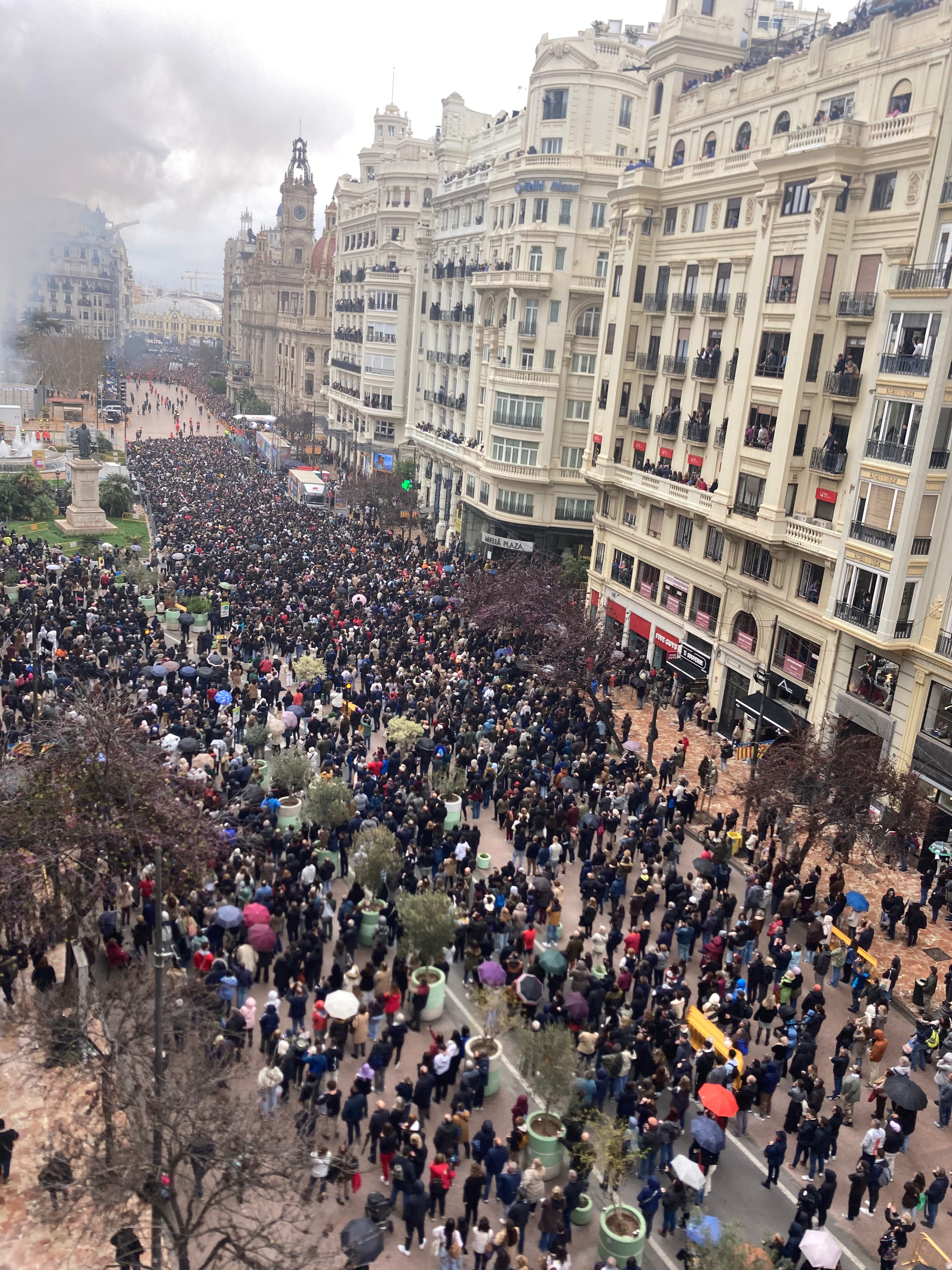
Valencia’s Oldest Street Party Is Also Its Strangest — And This Year It Turns 700
You’ve probably heard the drums somewhere near the Cathedral, spotted a crowd, maybe caught a glimpse of something enormous being pulled down a narrow street by horses — and kept walking.
Next weekend, don’t.
Corpus Christi is Valencia’s festa grossa — the big one. Not big in the Fallas sense of international press coverage and Instagram saturation. Big in the way that actually matters to the city: it’s been going since 1355, it has never stopped, and this year it turns 700. Valencia has been doing this longer than most modern nations have existed.
And it is, to put it plainly, wonderfully strange.
What you’re actually looking at
The centrepiece of the whole thing is a procession that leaves the Cathedral at 7pm on Sunday, led by what the Archdiocese of Valencia calls the largest processional monstrance in the world — over four metres tall, 600 kilos of silver. But the procession is almost the straightforward part.
What happens before it is harder to explain.
There’s La Moma: a man dressed as a woman in a white robe, face completely hidden behind a white handkerchief, who performs a ritual stick dance against seven figures in black masks and dragon hats representing the seven deadly sins. The sins lose. This has been happening since 1588.
There are the Rocas — enormous medieval floats, the kind that look like they belong in a Bosch painting — pulled by decorated horses from the Museo de las Rocas to the Plaza de la Virgen. There are giants (els Gegants) and dwarves (els Cabuts) dancing to the tabalet i dolçaina. There is a cavalcade that recreates the city’s medieval invitation to its citizens to attend the procession, because of course there is.
And then there is the poalà. At some point during the festivities, you will get a bucket of water thrown at you. This is traditional. It is also very welcome in this temperature.
Why this year is different
Most years, Corpus Christi happens and most of us living here miss it. This year, the city is marking 700 years of uninterrupted tradition — and pushing for national recognition as a festival of cultural interest, with UNESCO intangible heritage status on the longer-term horizon. The programme includes a new mass banda de música entrada on Sunday at 12:30 in the Plaza del Ayuntamiento, with ten music societies performing together. It’s a bigger production than usual.
How to do Sunday
The day builds gradually. The Cabalgata del Convite — the cavalcade with the dances, the Moma, the giants — starts at noon and winds through the historic centre. The Rocas begin moving at 4:30pm. Get yourself into position near the procession route by 6:30pm at the latest; the monstrance leaves the Cathedral at 7pm through the Puerta de los Apóstoles and moves through the old town before returning.
If you’re around on Saturday, don’t miss the poalà first. At noon on carrer Cabillers and Avellanes, buckets of water rain down from the balconies onto the Amics del Corpus as they pass below — who promptly retaliate on anyone within range.
Wear something you don’t mind getting wet.
Why it is worth it
Fallas gets the headlines, the tourists, the international coverage. It deserves them. But Corpus Christi is the festival Valencia grew up with — older than Fallas, older than most things, sustained for seven centuries not by tourism boards but by the city itself. If you want to understand where Valencia actually comes from, the old town on Sunday evening is a good place to start.
Corpus Christi takes place Thursday 4 and Sunday 7 June. The main procession is Sunday at 7pm, departing from Valencia Cathedral.
Full program from the Ayuntamiento site here