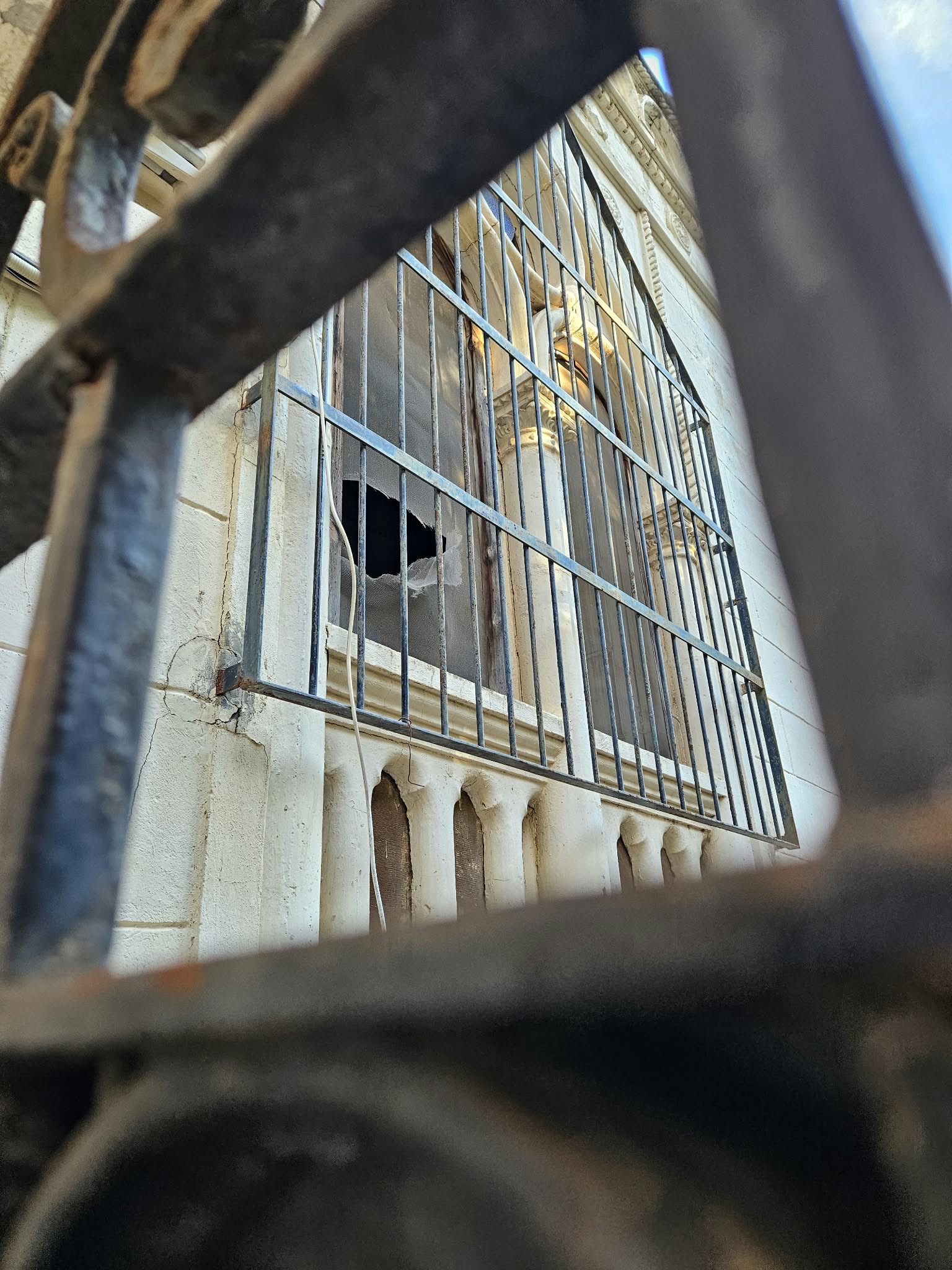
Abandoned houses are made for Halloween. Empty windows, a tower against the evening sky, a garden gone wild behind a wall covered in graffiti: the imagination does the rest.
Burjassot has three of them within walking distance of each other: majestic buildings, greyed and crumbling with time. A mansion of love and music, a retreat for the wealthy of another age, and a convent whose history has been lost.
There is something else these buildings make you think about, though, and it is not ghosts. Burjassot, a traditional working-class town, keeps getting harder to afford, with prices not far from those in popular city-centre neighbourhoods.
So perhaps, in the middle of a housing crisis, the scariest thing about an empty house may simply be that it is empty.
The Tenor’s House on Calle Lauri-Volpi
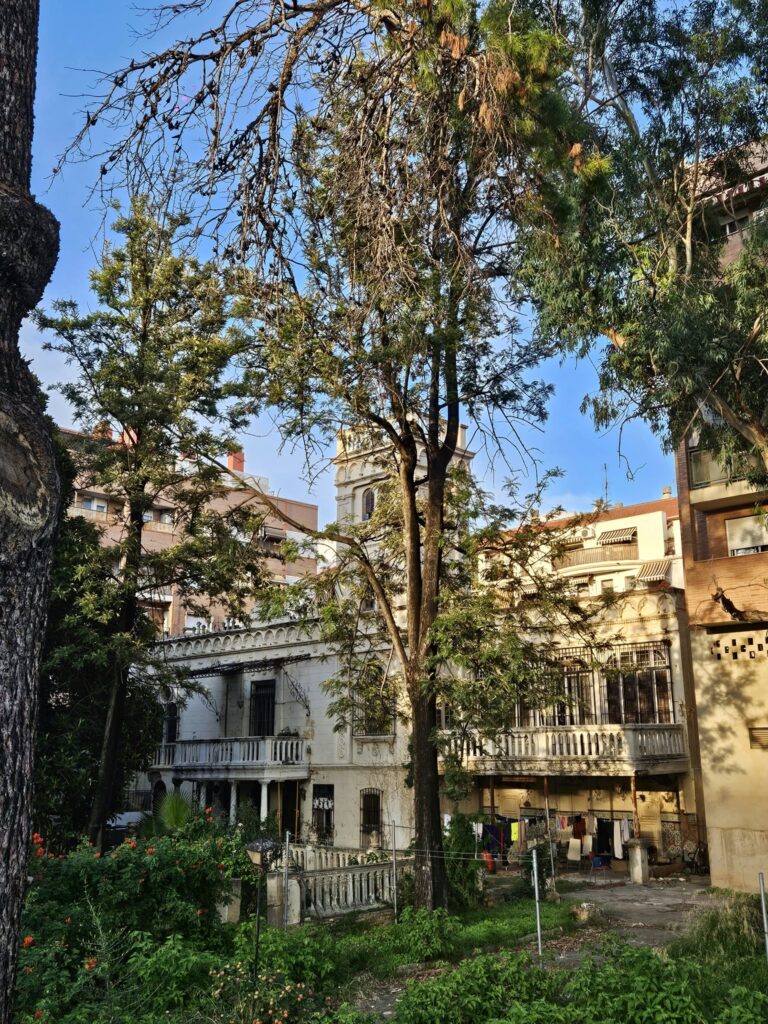
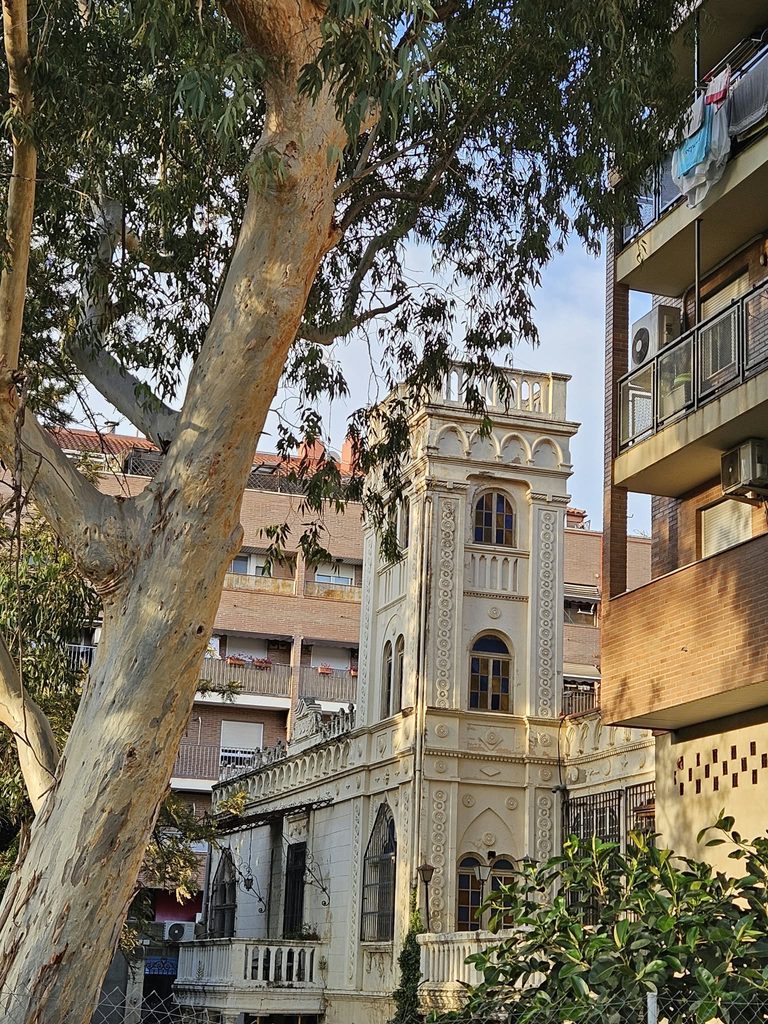
On a street of apartment blocks stands a 1910 palacete with a tower and a name set into its façade: Lauri-Volpi. Giacomo Lauri-Volpi (1892–1979), one of the great tenors after Caruso, lived here for more than half a century with his wife, the Alicante-born soprano María Ros.
They married in 1924 and were together for 46 years, until her death in Burjassot in 1970. He outlived her by nearly nine years. His last wish, it is said, was for his soul to go “with God (and his wife)”, his heart to Rome and his body to Spain, and the two now lie together in Godella.
A house frozen in time
The house stayed in the family. However, In 2022 the couple’s niece, whom they had raised as their daughter, opened it to an antiques specialist, who later wrote about what he found. It was a time capsule: the tenor’s photographs still on the walls, his scores in the cupboards, his rehearsal piano wrapped in blankets, and the costume from Verdi’s Don Carlo still hanging in a room. Around them, ceilings were coming down, and thieves had already taken the best furniture.
A foundation set up in 1988 hoped to turn the house into a museum. It never happened. The house was put up for sale in 2017, and idealista’s feature on the sale carries photos of the palacete. Whether it found a buyer is unclear.
It is still standing, still waiting, and with signs of okupas.
The Chalet Garín: The One That Tried To Come Back.
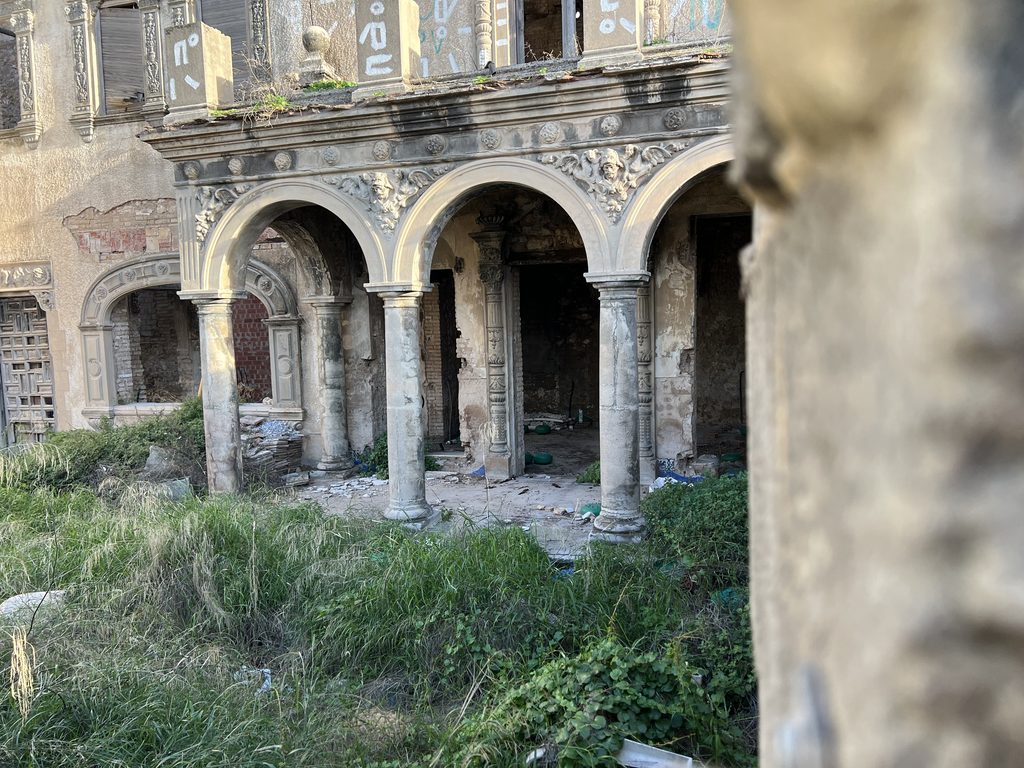
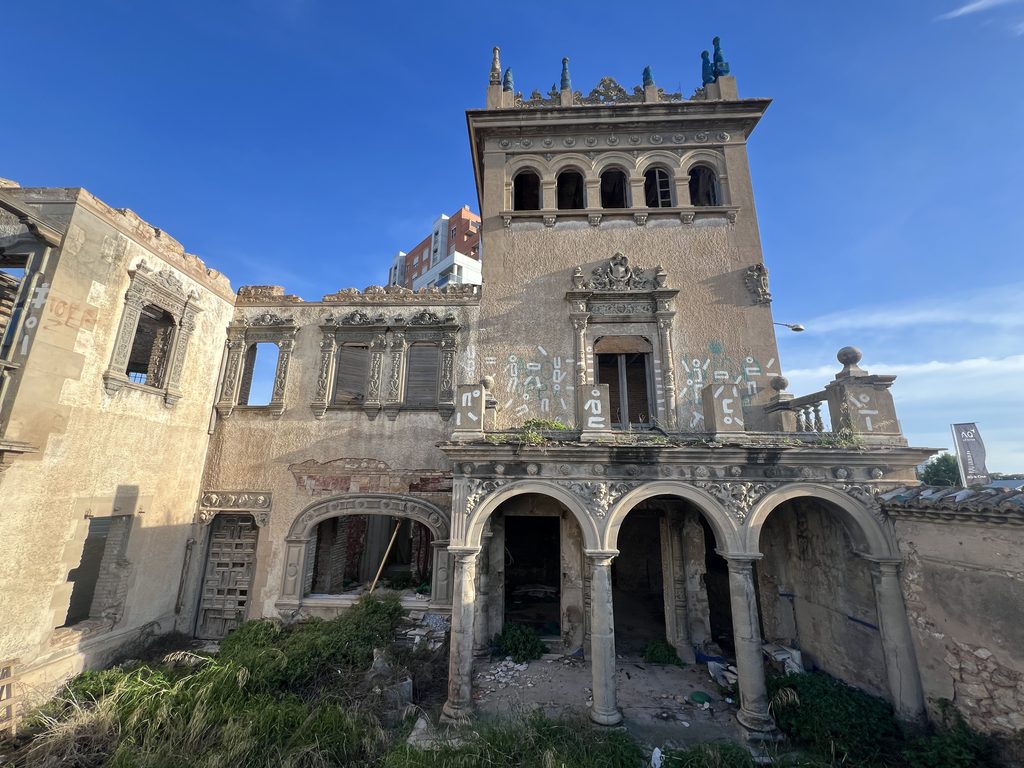
The Chalet de Garín, also called the Palacete del Rosal, sits strangely between the railway and the modern apartment buildings around it, walled off, with construction tools and equipment lying about. With its tower, it looks like a sibling of the Villa Indiano nearby, and a couple of similar villas in the area are falling into ruin too.
That is no coincidence. The chalet dates from the early 20th century, part of a wave of second homes that wealthy Valencia families built in the surrounding villages to escape the noise and dirty air of the growing city.
Decades of ruin
For decades the chalet stood empty and fell apart, until the council bought it and, in March 2021, signed an agreement with the regional housing department to rebuild it. Works began that October, under a €636,721 contract paid mostly with regional money.
The plan turns it into a community centre for El Empalme: a children’s play area and offices downstairs, and a multipurpose hall, digital classroom and workshop upstairs.
Unfortunately, it all stayed like that, a plan.
A Convent, of Course
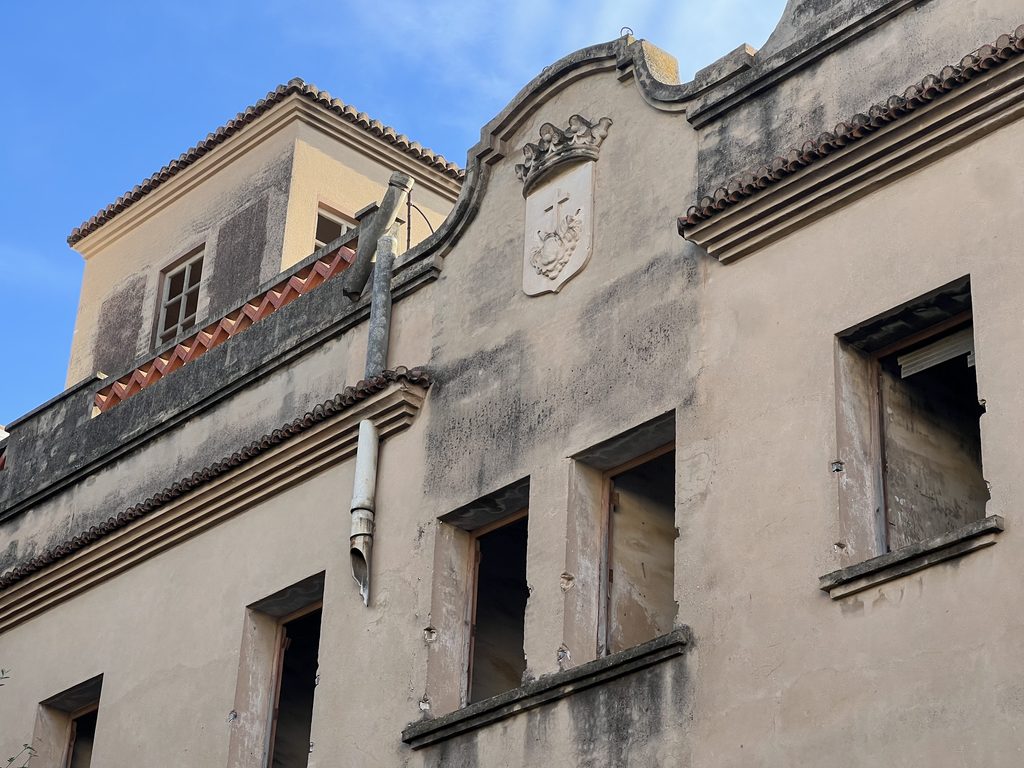
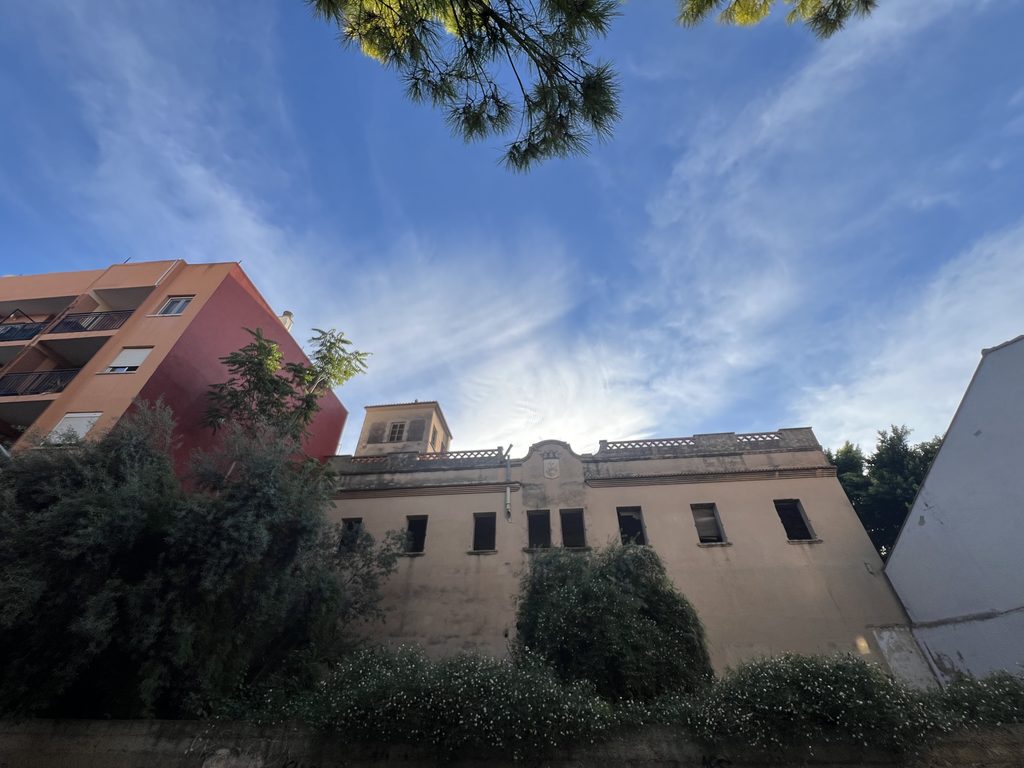
This one has set my imagination running wild for some time. Its high walls make it utterly impenetrable, and the vines grow unchecked well beyond them, almost reaching the pavement. Above them rises a small tower, empty windows and a faded coat of arms on the parapet.
And Very Mysterious
There is little on record about this building, but it is a personal favourite. However, we did find that the property register lists it for religious use: three floors and about 1,788 m² built on a plot of 1,203 m² (Catastro data). It is protected in the town plan, so its façades must be kept.
Beyond that, it has no story on record. We could not find which order built it, when, or when the last sisters left. It was already empty by 2011, when neighbours asked the council to keep it for public use; the council replied that it “has no assigned use”.
Fifteen years later, it is still waiting. In a town short of affordable homes, a protected, empty building of this size is its own kind of ghost.
Do you know this convent’s history? Write to us and we’ll add it.
Seeing Them Yourself
All three are a short metro ride from the city on Metrovalencia lines 1 and 2, and close enough to walk between.
- Lauri-Volpi house: on calle Lauri-Volpi, close to Burjassot-Godella metro. Look up for the tenor’s name on the façade and the tower above the rooftops.
- The convent: at Mestre Lope 86, on the corner of Plaza Federico García Lorca, with its other front at Blasco Ibáñez 34.
- Chalet de Garín: in the El Empalme neighbourhood, near Empalme metro.
All of them are closed and unsafe inside. Admire them from the street.
If you want more of the town’s story, Burjassot runs free guided cultural routes on Saturdays through the autumn. They are free, but you need to book a place online.
What Really Haunts Them
But none of these houses comes with a ghost story. No headless nun, no tenor singing at midnight. What lingers in them is real and human: a love story, a fortune spent on a summer house, a convent nobody remembers.
They are haunted only by their past, and by a harder question: why they stay empty, in a town where so many people are looking for somewhere to live.
That is perhaps what should keep us up at night.