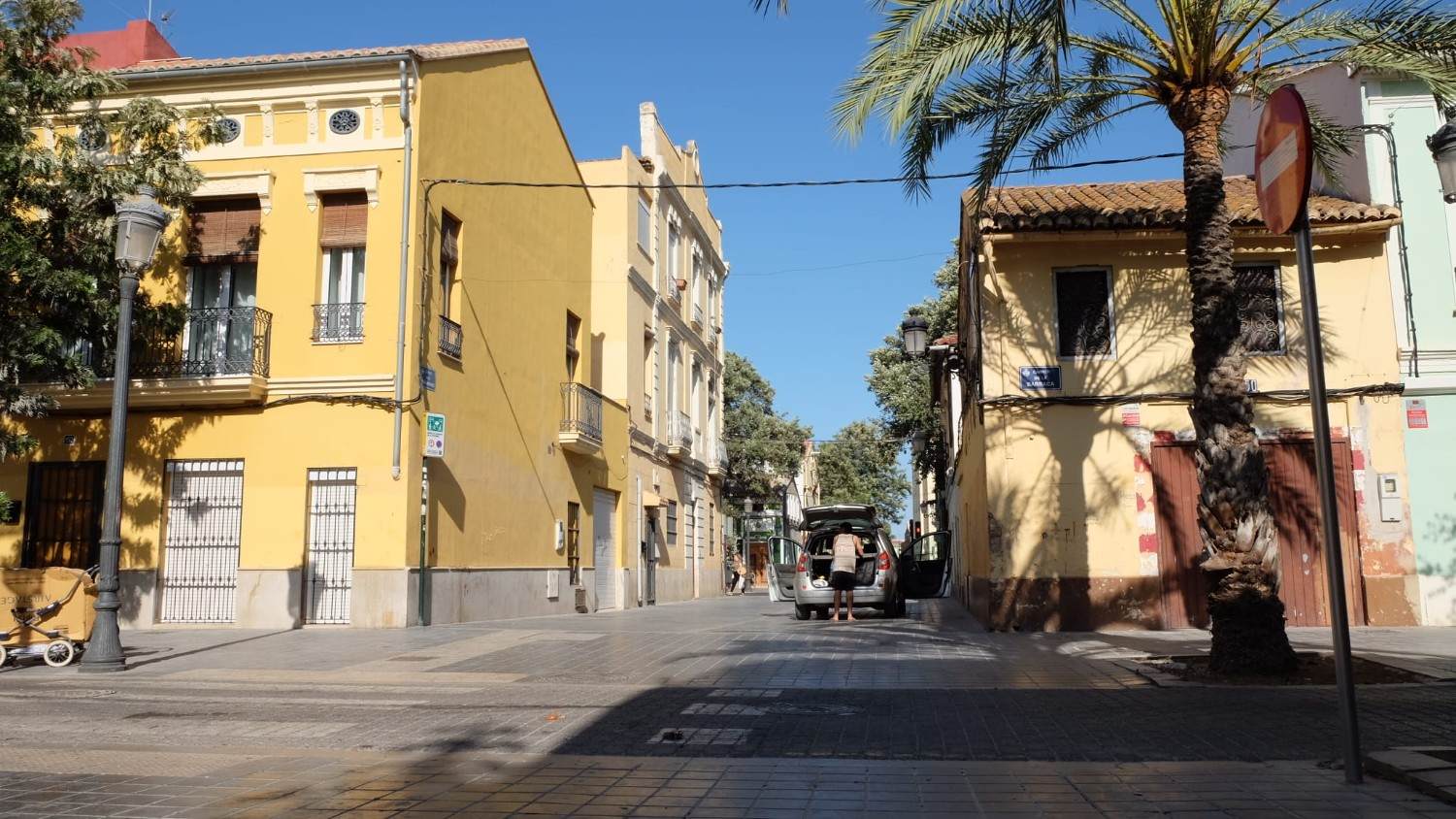
For generations, the fishing boats of El Cabanyal were dragged in and out of the sea by teams of oxen. It was a sight so impressive that Ernest Hemingway put it in good writing: in For Whom the Bell Tolls, Pilar sums up Valencia as oxen hauling a sailing boat out of the morning sea.
As I write this, I wonder how fair it is to sum up a whole city with a single fishing scene: Valencia has always been as much huerta, silk and market stalls as it is sea. (Sorry, Papa)
Yet other artists also saw the sea as the heart of the city: Joaquín Sorolla painted the scene again and again, and Vicente Blasco Ibáñez set his 1895 novel Flor de mayo among the fishing families of these same streets.
The oxen can still be seen today, life-size, in the very building where they were once stabled: the Casa dels Bous, which reopened in September 2026 as the Museu de la Mar. They stand beside a full-size llaüt, the traditional fishing boat, and figures of Sorolla and Blasco Ibáñez.
Yet El Cabanyal is no museum piece. It is a former fishing town of tiled houses, Easter processions on the sand, and residents who fought off the bulldozers, and one of Valencia’s most distinctive places to live.
A Town of Its Own: Where El Cabanyal Comes From
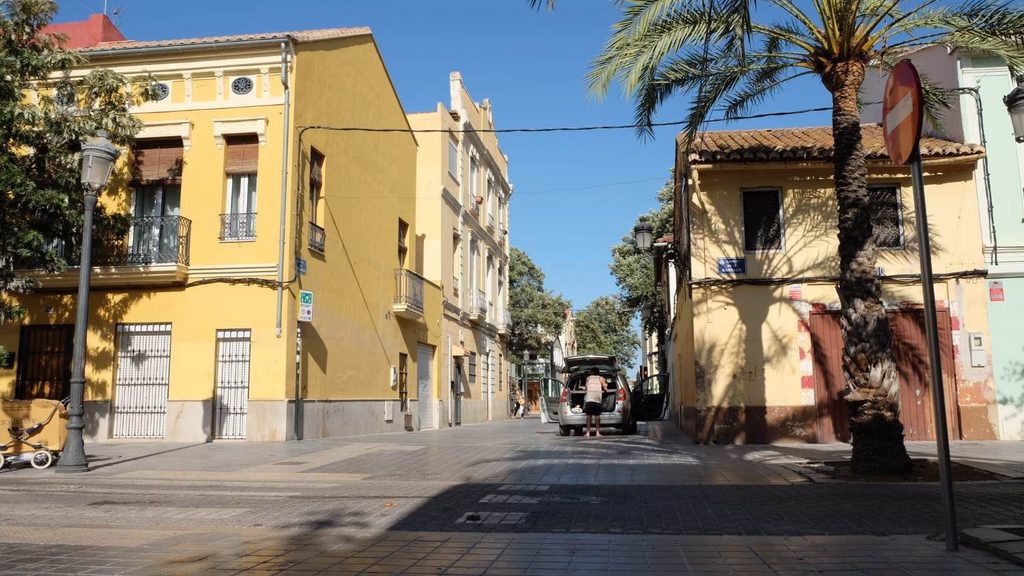
El Cabanyal sits about three kilometres east of Valencia’s old town, but for most of its history it was not part of the city at all. It was a fishing settlement with its own customs, its own saints and, for most of the 19th century, its own town hall. Even the name points to its past: cabanyes were the thatched huts, or barracas, where fishing families lived in rows along the beach.
Thatch huts packed tightly together burned easily, and fires between 1796 and 1875 destroyed the settlement again and again. After the worst fire, in May 1875, the town banned new barracas, and families rebuilt in brick. The Marqués de Campo paid for new homes for those who had lost theirs, modelled on the barracas but with safer roofs and materials. They kept the old layout, though, so today’s street grid still follows the lines of the original huts. Walk inland from the beach today and you cross street after street running north to south, each one a long, narrow block of houses facing the next.
Poble Nou de la Mar: a town that didn’t want to be annexed
In 1837, El Cabanyal, El Canyamelar and Cap de França united as an independent municipality called Poble Nou de la Mar, literally “the new town by the sea”, according to the city history museum.
It had its own council, housed in a building that also served as the municipal slaughterhouse. That building, L’Escorxador on Carrer de Sant Pere, now holds the neighbourhood archive and visitor centre.
By then, Poble Nou de la Mar was also a fashionable summer resort. The city history museum notes that Valencia’s bourgeoisie spent their summers here from the early 1800s, as the beach widened with the construction of the first harbour.
The best-known survivor of that era is the Balneario de Las Arenas, an elegant seaside bathhouse founded in 1898 that gave the beach its popular name. The luxury Hotel Las Arenas, on Carrer d’Eugènia Viñes, now occupies the site and preserves elements of the original building. Casa Montaña, the 1836 tavern on Carrer de Josep Benlliure, also dates from the years when it served holidaymakers as well as sailors.
Independence ended on 7 June 1897, when the town was annexed to Valencia. An academic study of the neighbourhood records that residents resisted firmly. More than a century later, the old separation lingers in everyday speech: older residents still say they are going “to Valencia” when they head into the centre.
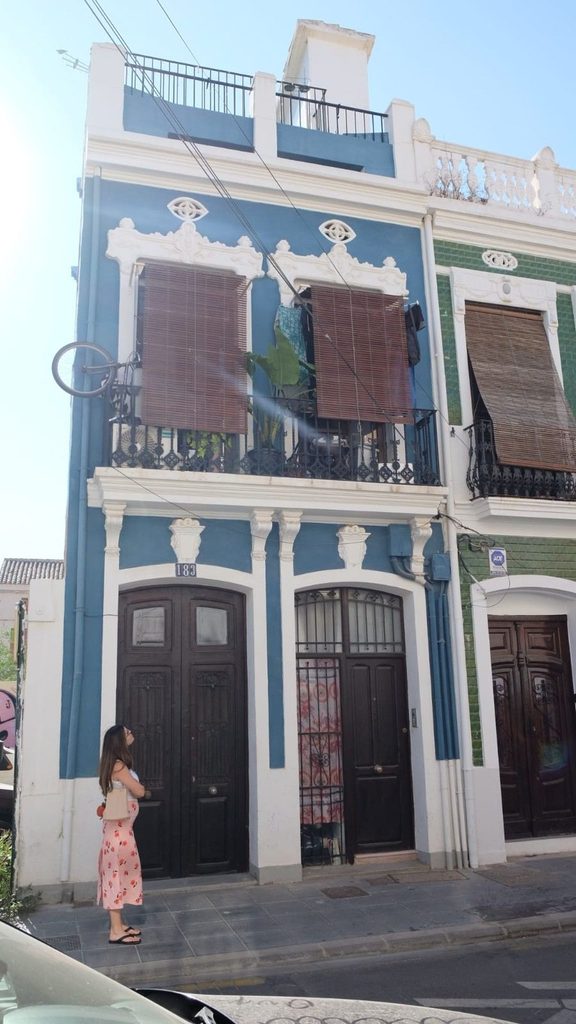
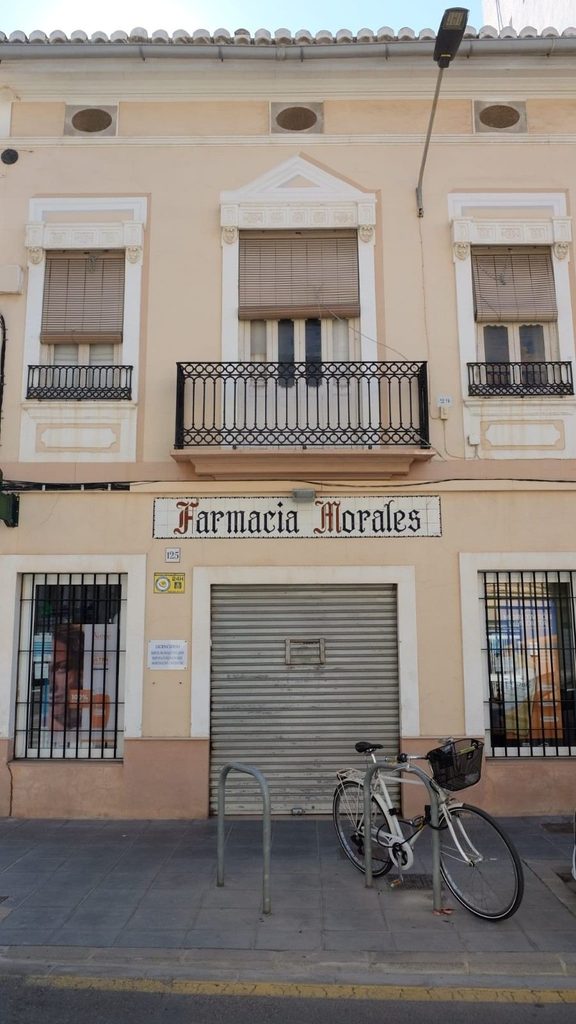
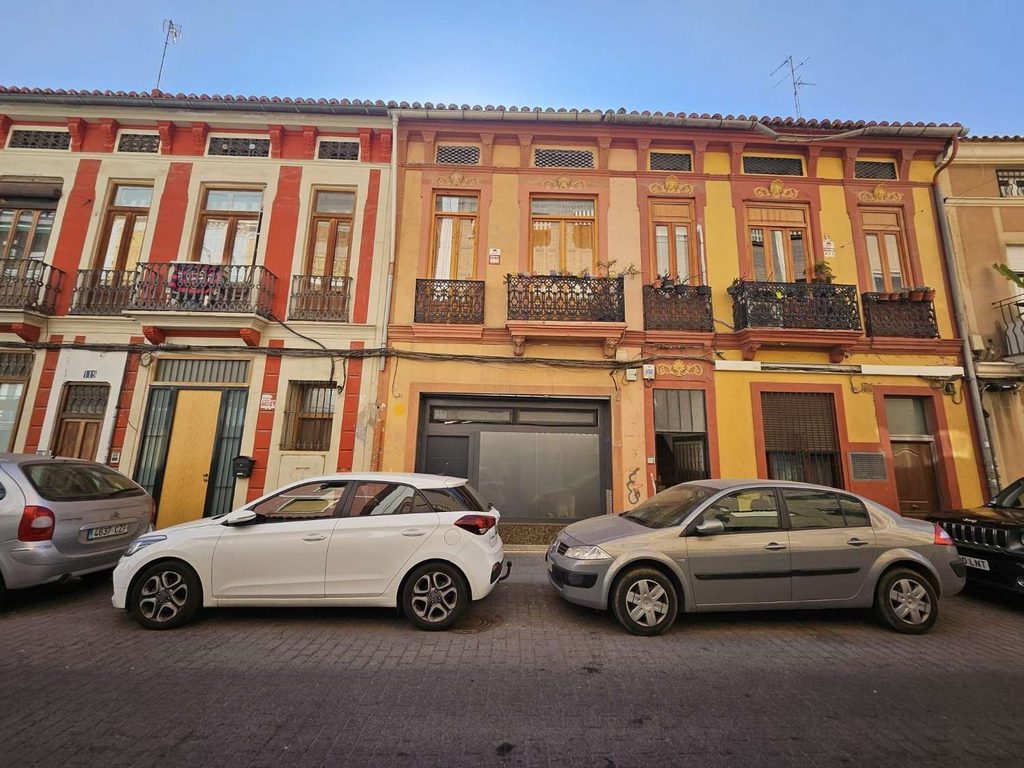
Modernisme for Fishing Families: The Tiled Façades of El Cabanyal
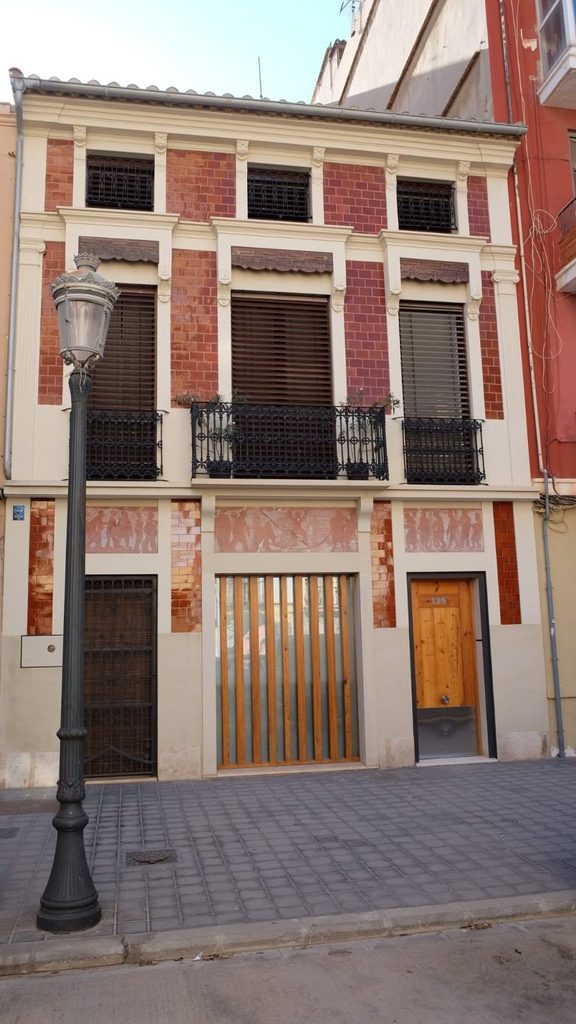
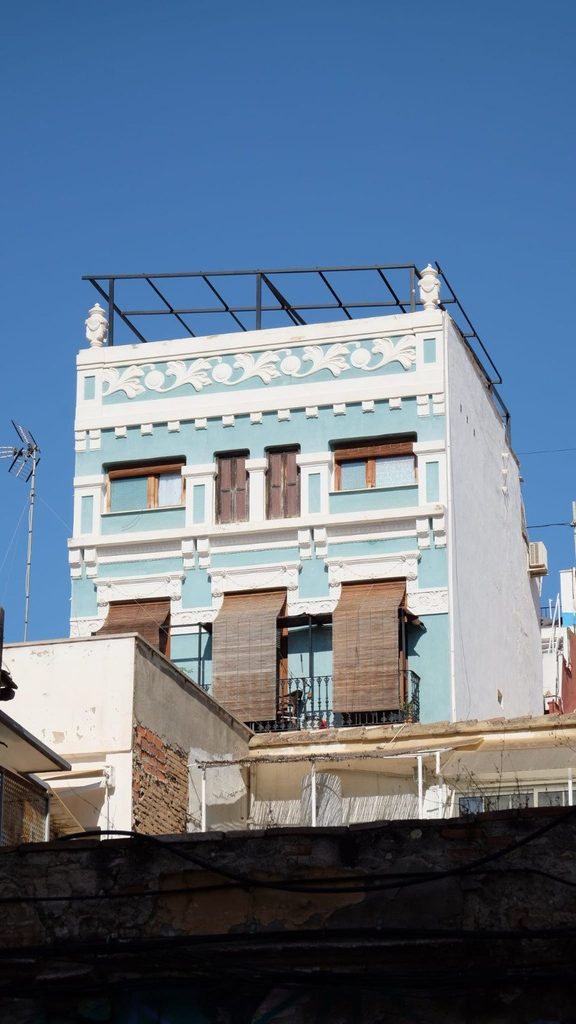
That independent streak is still written on the streets, most visibly on the façades of the brick houses that replaced the barracas. Believe it or not, El Cabanyal is an example of Modernisme, just not the one of Barcelona and Gaudí. Here the patrons were fishermen, net-makers and small shopkeepers, and the canvas was a narrow two-storey house.
Those new brick homes became the canvas: many families decorated their fronts with ceramic tiles. Some chose a single colour; others mixed floral, geometric and Art Nouveau patterns. Each façade reflects the taste of whoever paid for it, which is why no two streets look quite alike. Most of the best façades are on Carrer de la Reina, Carrer de Josep Benlliure, Carrer d’Escalante and the streets around Carrer del Progrés, which reward a slow walk.
The decoration doesn’t stop at the tiles: balconies, cornices and door frames are often just as ornate. And a fact worth knowing as you walk: of the neighbourhood’s 700 protected houses, 300 still carry architectural tiles on their façades.
The Avenue That Never Reached the Sea
Those façades very nearly didn’t survive. In 1998, Valencia’s city council drew up a plan to extend Avinguda de Blasco Ibáñez about 800 metres to the beach, straight through the historic grid. It meant demolishing hundreds of houses in a neighbourhood that had been protected as a Bien de Interés Cultural since 1993.
Residents organised almost at once. Under the slogan “rehabilitation without destruction”, the platform Salvem el Cabanyal fought the plan in the courts for almost twenty years. In 2015 a new council halted the demolitions and turned to restoring the barrio instead. The avenue still ends where it always did, at the edge of the old grid, and the tiled houses are still standing.
The houses were saved, and the platform itself has since disbanded. Yet “Salvem el Cabanyal” still hangs from a few balconies, and today it reads a little differently: less a plea against the bulldozers, more a warning about rising rents and holiday lets.
Who gets to live in El Cabanyal now is another story, and it’s the one we pick up in Part II.