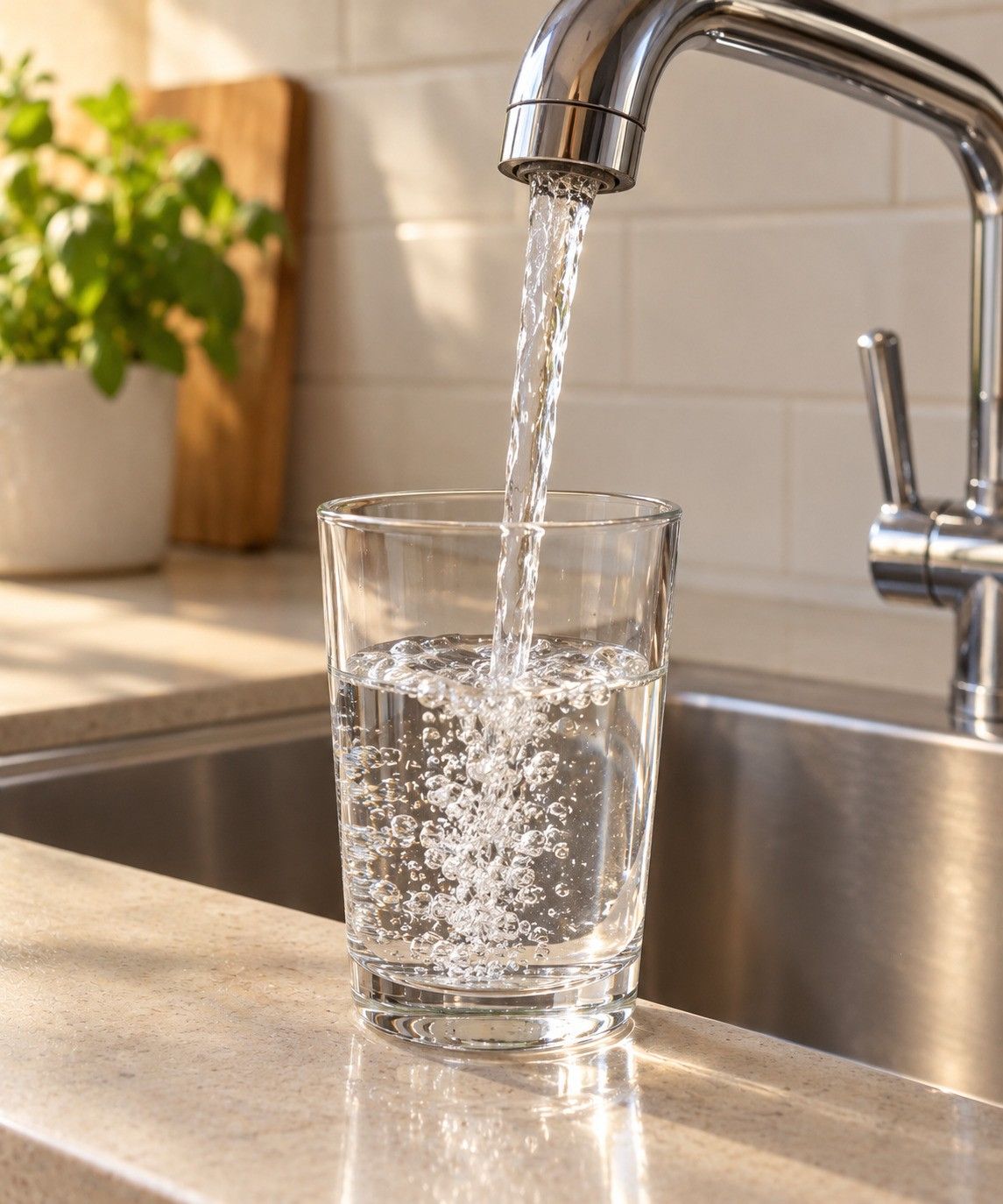
Valencia takes its water seriously enough to have its own court for it: every Thursday at noon, outside the cathedral, the Tribunal de las Aguas settles disputes over the Turia’s irrigation channels, as it has for centuries. Its jurisdiction ends at the fields, though. What comes out of your tap is another story.
Valencia’s tap water starts life as river water from the Turia and the Júcar, but before it reaches your kitchen, it passes through one of two treatment plants west of the city: La Presa in Manises and El Realón in Picassent.
Unlike electricity and gas, where the retail market is liberalised, you can’t shop around for water: supply is a municipal service, and each town has a single operator, which, as you have most probably guessed, means you pay the tariff your town sets.
Which is unfortunately a lot.
In FACUA’s study of 2022 tariffs, Valencia was the most expensive city on the mainland. In consumer group OCU’s latest comparison, a Valencian household using 150 m³ a year pays €338. That’s more than double the €148 paid in Ourense, though still well short of Barcelona’s €516. And OCU singles out Valencia for meter charges it calls ‘excessive and poorly justified’.
So what do you get for €338 a year? Water that’s perfectly safe, and famously unloved.
Safe, Yes. Tasty? Debatable.
You may drink your tap water and rest assured you will wake up the next morning.
Spain’s drinking water is tightly regulated under EU rules and national law, and results are reported to a national database, SINAC.
So why do so many people here buy bottled water or install osmosis filters? Mostly taste. Chlorine is part of it — yes, the same stuff as in the pool; I shudder as I write this. The other part is natural: compounds present in the Júcar-Turia canal give water an earthy or musty note.
And then there’s hardness. Hardness is the amount of dissolved calcium and magnesium in the water. Water picks these minerals up as it runs through limestone — and the land between the Júcar’s headwaters and Valencia is full of it.
And how hard is it? Very. Hard enough to make your chickpeas sulk: calcium in the water keeps pulses stubbornly firm, which is why many Valencian cooks add a pinch of bicarbonate to the soaking water.
Though it is important to know that hardness is a household nuisance, not a health problem. It isn’t one of the safety parameters that decide whether water is fit to drink, and the WHO sets no health-based limit for it. What it does do is leave that annoying white scale on everything it touches: kettles, taps, shower screens, shortening the life of boilers and washing machines…
A complete nightmare.
The whole Mediterranean arc has broadly hard water; it’s a matter of geology. So where is the water better? Madrid, the famously soft-water city, along with much of the northwest. Most of Madrid’s supply comes from reservoirs in the granite Sierra de Guadarrama, and granite gives up very few minerals.
It’s common knowledge in Spain that Madrileños love to brag about their water, while the rest of the country rolls its eyes for the hundredth time.
What You’re Really Paying For
Now, the serious bit. Each council decides how to run its water service. It could be public, private, or a mix, like ours. In Valencia city, your tap water comes from EMIVASA, 80% owned by Aguas de Valencia and 20% by the City Council. Your two-monthly bill is less a water bill than a collection envelope.
Only part of it pays for water; the rest is collected on behalf of the Generalitat, the metropolitan waste authority and the City Council. The bill includes things such as the Júcar basin charge, service fee, investment tariff, sewage treatment charge, waste charges, and, yes, the water used, which is often one of the smaller lines.
And one line is about to change.
From 1 October, the investment tariff (tarifa de inversiones) on your water bill rises from €0.403 to €3.403 a month for the standard 15 mm meter that 98% of households have. That’s €36 more a year.
The money funds EMIVASA’s €120 million plan for 2026–2031. This year’s first €21 million covers backup generators for La Presa, fire-fighting water for the Devesa del Saler and more free filtered-water fountains. The official trigger was the 2024 DANA and the April 2025 blackout. The council’s own paperwork adds another reason: the city’s pipe network is ageing faster than it’s being renewed, after years of cuts to this same tariff.
Is it really a rise? The council calls it neutral, because it replaces a surcharge that ends the same month. That surcharge was repaying the sewage charge the Generalitat deferred in 2022–23. Your bill may barely change, but without the new tariff it would have gone down, and the charge stays until 2031.
So, next time you fill your glass, raise it to the Turia. It’s really come a long way to get there.
Read more about Valencian waters in our piece about El Saler: The Lagoon That Fed Valencia Is Running Out of Breath