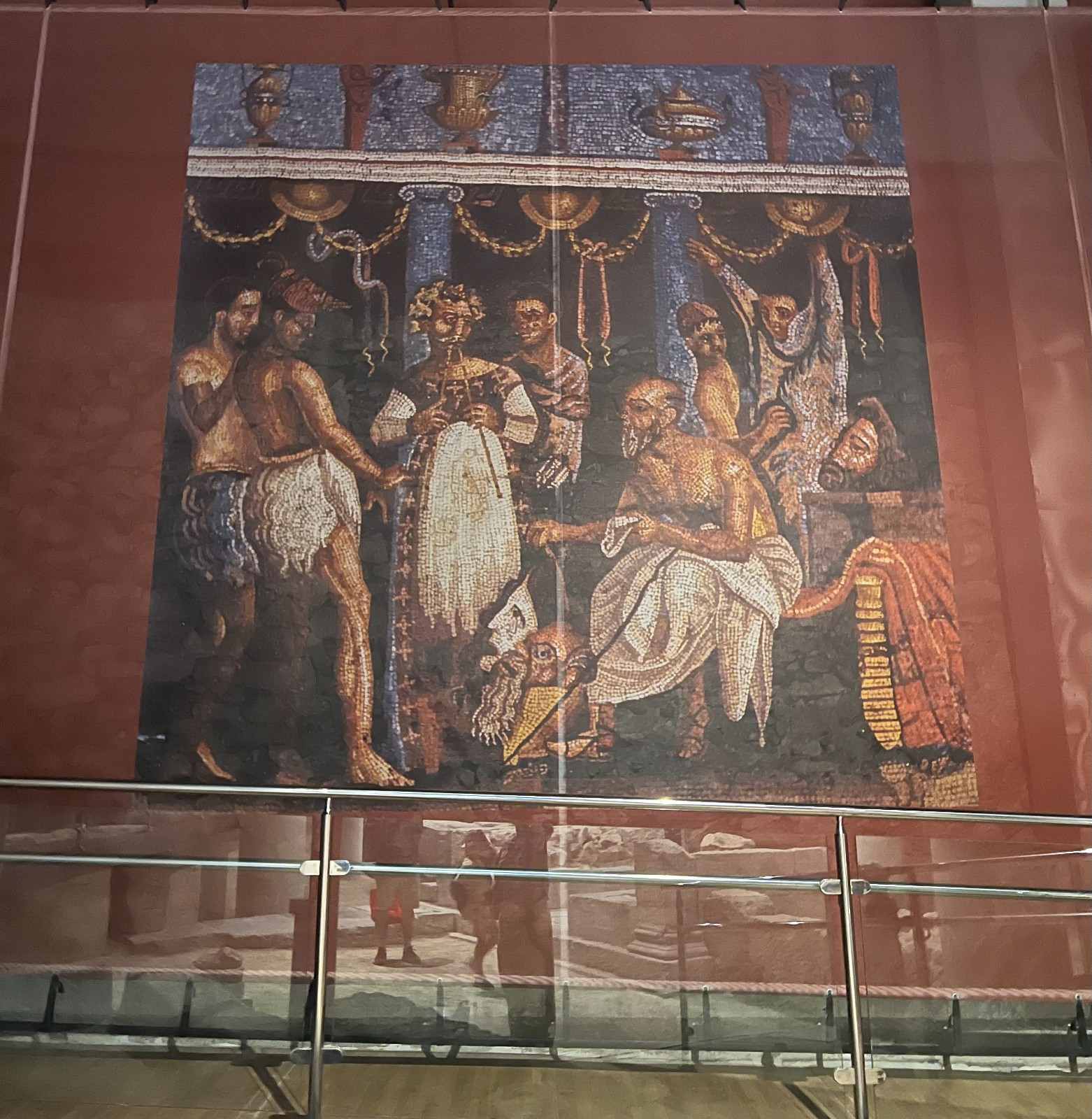
Every 9 October, the city celebrates 1238, the year Jaume I rode in. The Senyera, the city’s historic flag, is lowered from the town hall balcony, kept upright because by tradition it bows to no one, and most of what you’ll hear begins with the Conquest.
But stand in the square behind the Cathedral and you’re on top of an older beginning.
The other founding story
Valencia was first founded in 138 BC, by the Roman consul Decimus Junius Brutus, who settled discharged soldiers on a small island in the Turia and gave them land. They called it Valentia, a name rooted in courage.
The first city did not last. It was destroyed in 75 BC during the war between Pompey and Sertorius, and excavations at L’Almoina turned up the remains of executed soldiers with their weapons. The site stood almost empty for about fifty years.
It came back. From the middle of the 1st century AD, Valentia grew again, with a forum, a circus, a river port near today’s Torres de Serrans (hard to imagine, among today’s throngs of tourists, that there was once water there), and even piped water, a service the city wouldn’t have again until the mid-19th century.
Most of that city is now underground: twenty centuries of rebuilding have raised the ground so much that a recent dig in the old town found 1st-century Roman paving almost 4 metres below today’s pavement.
But Roman Valencia never really left.
What the Romans left behind
Roman Valentia is all around, but when in doubt, there are five places where to look when you feel unsure.
- The heart of the city hasn’t moved. When Valencia gathers for something that matters, it goes to the Plaça de la Mare de Déu. That square and the Basílica beside it sit on top of the Roman forum, where the temple, the law courts and the curia, the city’s senate, once stood. Two thousand years on, the cathedral, the basilica and the Generalitat’s palace crowd around the same few hundred metres.
- The original Roman streets are in use (mostly). Roman towns were laid out around two main streets: a north–south one, which the Romans called the cardo, and an east–west one, the decumanus. In Valentia, the two crossed right inside what is now L’Almoina, and the east–west one followed what is now Carrer de Cavallers. The north–south street was part of the Via Augusta, the main Roman road through Hispania, which ran from Rome down the coast to Cádiz.
- A chariot track under the old town. Valentia had a circus for chariot races on the eastern side of the old town, with room for around 10,000 spectators. Pieces survive under the Centre d’Art Hortensia Herrero and under the medieval cemetery of San Juan del Hospital.
- The patron saint is a Roman story. Every 22 January, Valencia celebrates Sant Vicent Màrtir, patron of the city. Vicent was a deacon arrested in 304 during the emperor Diocletian’s persecution of Christians, then tried and martyred in Valentia.
- The local languages. Maybe obvious, but if you’re working through Spanish or Valencian classes, you’re learning two descendants of the Latin spoken here.
Where to see Roman Valencia
In the city
The best-known site, L’Almoina behind the Cathedral, shows the forum, the baths and traces of the first settlement, but it is closed for works until autumn 2027. Until then, the circus is your best bet: its remains sit in the basement of the Centre d’Art Hortensia Herrero on C/ del Mar, at the end of the art visit, and a stretch of its central wall lies under the medieval cemetery of San Juan del Hospital, seen on guided visits.
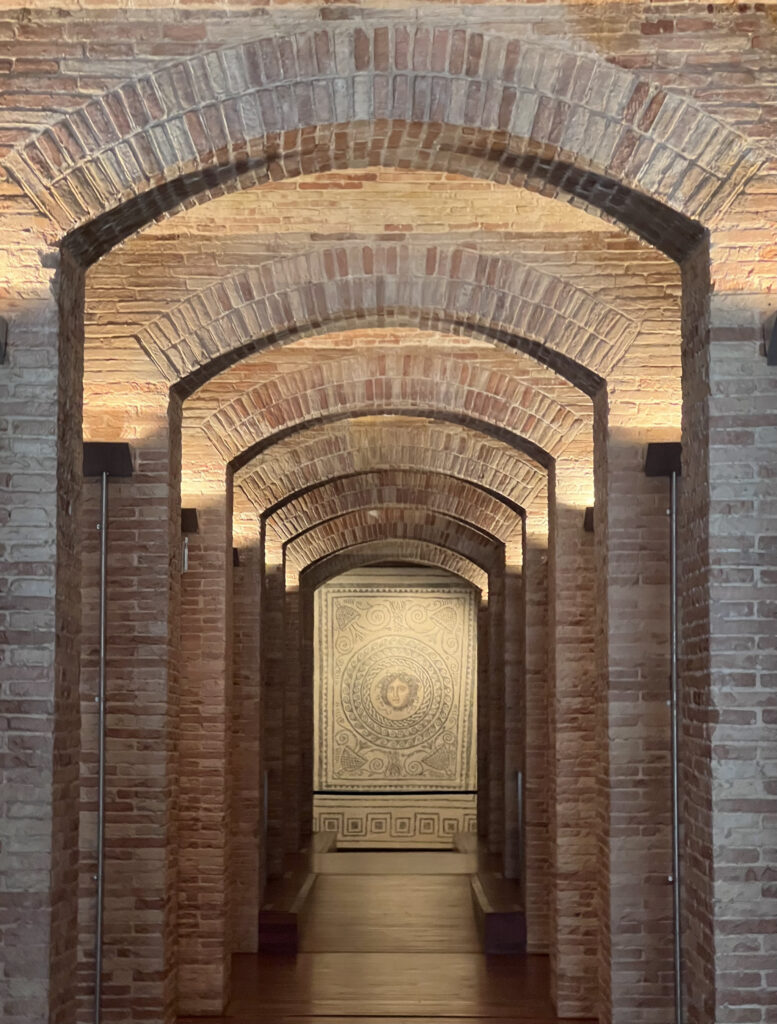
For other treasures, the Roman room of the Museu de Prehistòria in La Beneficència holds the Font de Mussa mosaic and a bronze Apollo found at Pinedo beach. The Museu d’Història de València, by Parc de Capçalera, greets you with a Roman mosaic of Medusa.
Llíria, ancient Edeta
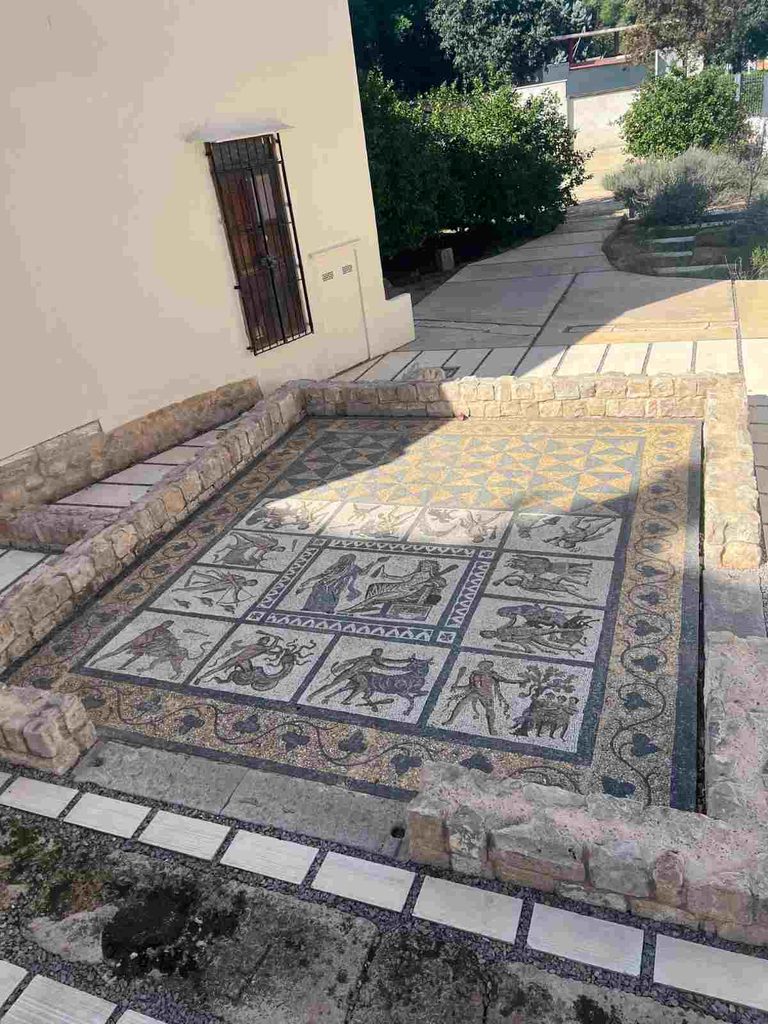
One metro ride away on line 2, Llíria is the easiest day out. Start at the tourist office, built around two Roman mausoleums, then walk to Ca Porcar to see a replica of the Twelve Labours of Hercules mosaic.
The original turned up in the house in 1917, and in 1941 its owner sold it to the national museum in Madrid for 25,000 pesetas. Up the hill, the archaeology museum (MALL) keeps a hoard of 6,000 Roman silver coins; it alternates opening with the tourist office, so plan your visit in advance.
The town’s star site, the Sanctuary and Baths of Mura, is unfortunately temporarily closed. However, the town has no shortage of architectural wonders: Arab baths, a medieval quarter, and baroque churches that will extend the visit.
Sagunt
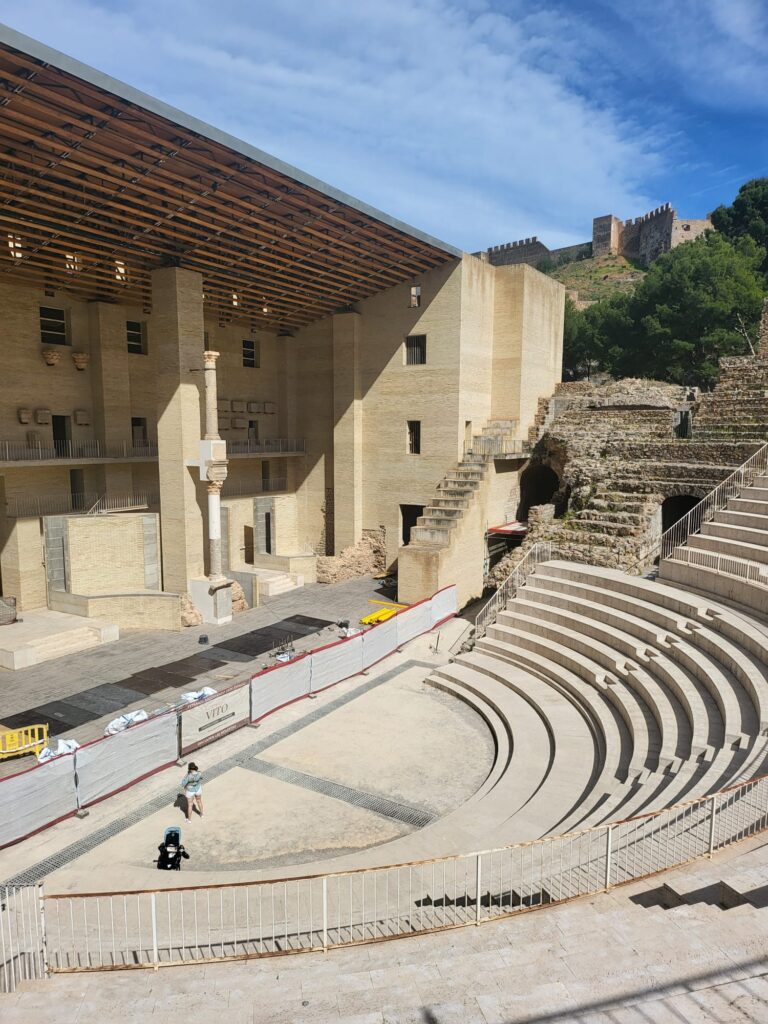
Thirty kilometres north, Sagunt has the most Roman stone you can walk on in a morning. The mid-1st-century theatre on the castle hillside still hosts summer performances; higher up, the forum sits inside the castle walls, beside a collection of Latin inscriptions, and the archaeology museum fills in the details. All three are free. Down in town, the Via del Pòrtic and Domus dels Peixos preserve a Roman arcaded street and a house.
Peña Cortada: an aqueduct in a gorge
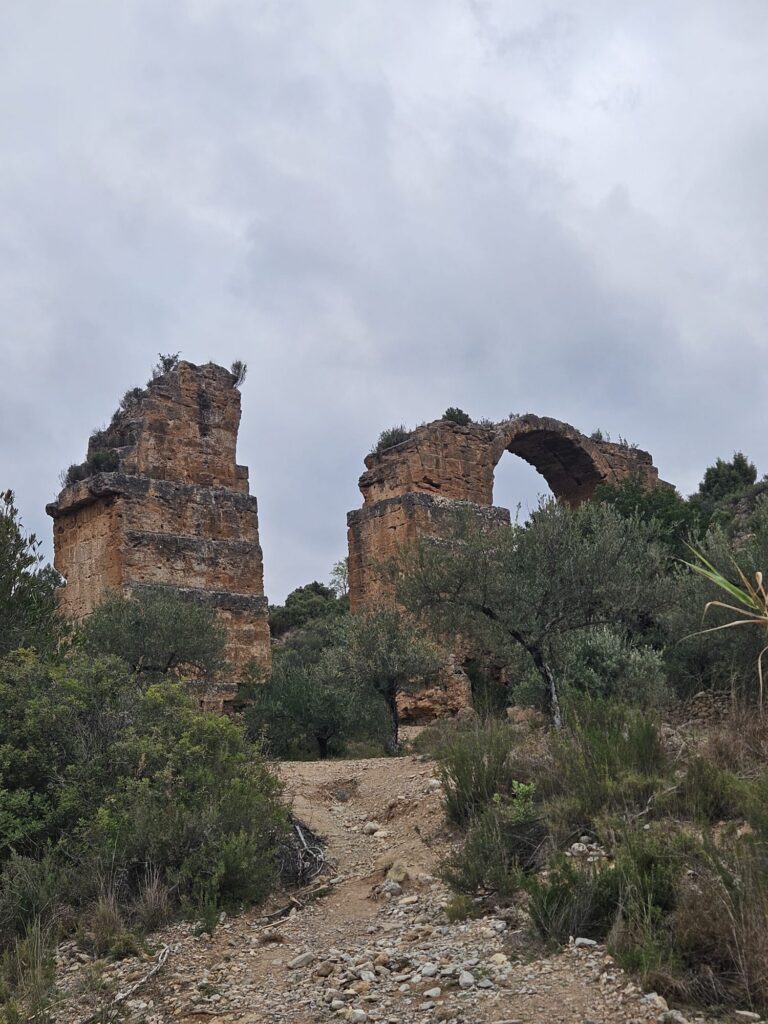
An hour inland near Chelva, a 1st-century aqueduct crosses a ravine on a 33-metre bridge, then runs through a cut in the mountain and tunnels carved by hand. A 12 km circular walk links, an authentic thrill, not for the faint-hearted.
The first Valencia is still there
So next 9 October, when the Senyera comes down from the balcony and the crowds fill the old town, spare a thought for the city underneath. Four metres below your feet are the streets where a handful of Roman veterans got something more lasting: a city that kept their name, their crossroads and their square, and still argues in their language two thousand years on.
Related features
The Weekend Plan: Sagunt with Kids
A city of Saints: Understanding the Valencians’ Religious Holidays