Last checked: 5 October 2026
The short answer: The padrón is your free registration with Valencia city hall at your home address. Do it as soon as you have one. Book a cita through valencia.es or by calling 010, then bring your passport and proof you live there. It is separate from your NIE or visa, and you’ll need it for your SIP health card, school places and plenty more.
Key facts
- The padrón (empadronamiento) is a municipal register run by the Ayuntamiento de València, not an immigration process.
- Registering and getting certificates are free.
- Book by phone on 010 from inside the city, or 963 100 010 from outside it: Monday to Friday 8:30–18:30, Saturday 9:00–14:00, closed Saturdays in August. (Ayuntamiento de València)
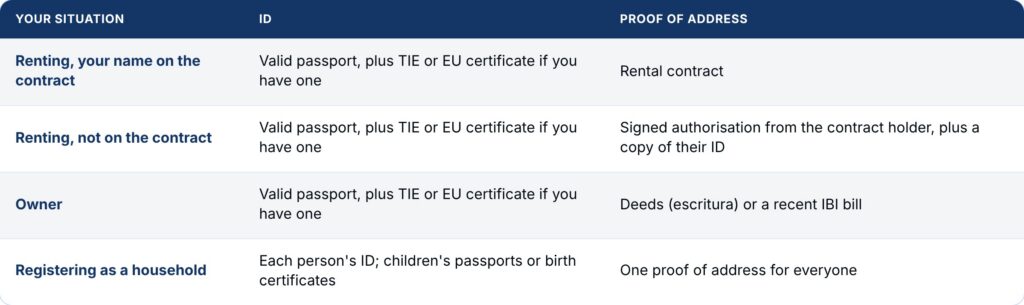
- You need ID (a valid passport works) plus proof of address: a rental contract, deeds, or written authorisation from whoever holds the contract, with a copy of their ID.
- A household living at the same address can register together.
- Non-EU residents without permanent residence must renew their padrón every two years, or the city removes them from the register. (Ley 7/1985, art. 16)
- Once registered, you can request certificates online. (Certificado de padrón)
Ask anyone who has moved to Valencia what they wish they’d done sooner, and the padrón comes up again and again. It sounds like a formality: you tell the city where you live. But it sits quietly underneath almost everything else, from your health card to your child’s school place, and the longer you leave it, the more queues you end up standing in twice.
What the padrón is, and why it comes first
Three pieces of ID get confused constantly: your NIE (your foreigner number), your TIE or EU registration certificate (proof of your residence status) and the padrón (proof of where you live). They come from different offices. The padrón is the only one the city runs, and it doesn’t depend on the other two.
It matters early because so much hangs on it. Your SIP health card, school applications through ADMINOVA, the EMT Infantil bus pass, a resident bank account and a driving licence exchange all expect it. A padrón at your address is also part of the paper trail that protects you if a landlord ever claims your long-term home was a “seasonal” let.
Step by step
- Get an address. A signed rental contract or deeds is the simplest proof.
- Book a cita previa. Call 010 (963 100 010 from outside the city) or use the Ayuntamiento’s booking page.
- Gather your documents. See the table below. Bring originals and photocopies: offices rarely have a copier.
- Ask your landlord for the referencia catastral. It’s the property’s land-registry code, printed on the IBI bill or the deeds, and it’s a field on the registration form.
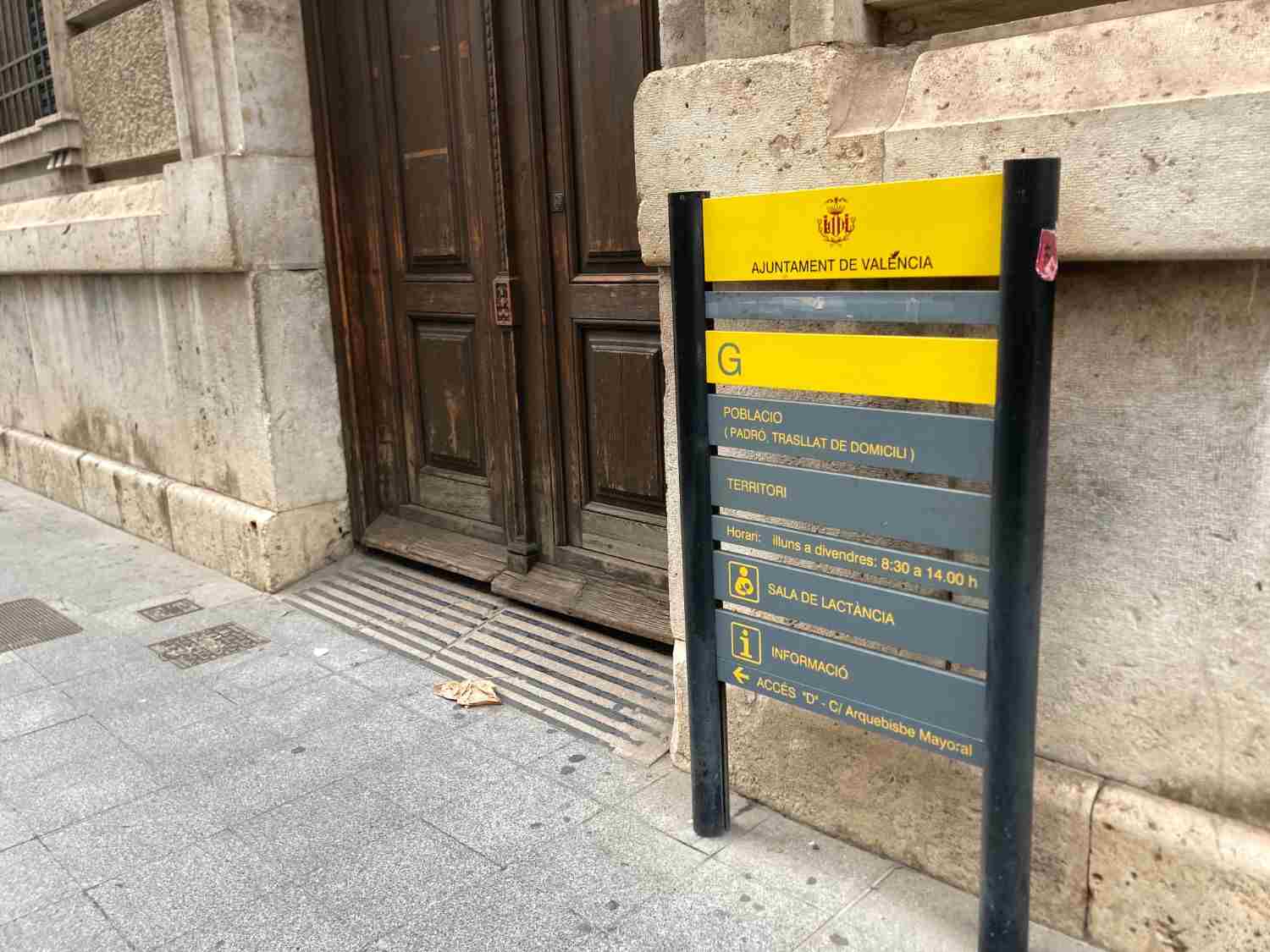
- Attend the appointment at the Oficina del Padrón on Plaza del Ayuntamiento or your district office (Junta Municipal).
- Ask for a certificado de empadronamiento before you leave, and keep a scan on your phone.
What to bring, by situation
FAQ
No. The padrón is a municipal register, separate from immigration status, and a valid passport is accepted as ID. Bring your TIE or EU certificate too if you already have one.
Nothing. Registering and requesting certificates are free.
Yes. Bring a signed authorisation from the person whose name is on the contract, plus a copy of their ID.
Yes. It’s tied to your address, so a new flat means a new registration.
For EU citizens and permanent residents, no. Non-EU residents without permanent residence must renew it every two years. Many procedures also ask for a certificate issued in the last three months, so you’ll need to request fresh ones over time.
Your SIP health card, school applications, the EMT Infantil bus pass, a resident bank account, and a driving licence exchange, among others.
Related guides
- New in Valencia: Guides for Settling In
- NIE vs TIE: What They Are and How to Get a Cita in Valencia
- How to Get a SIP Card and a GP in Valencia
Once you have the certificate, keep a paper copy in your admin folder and a scan on your phone. You’ll be asked for it more often than you’d think. Next on the list for most people is the NIE/TIE appointment, and that one is worth booking the same week.