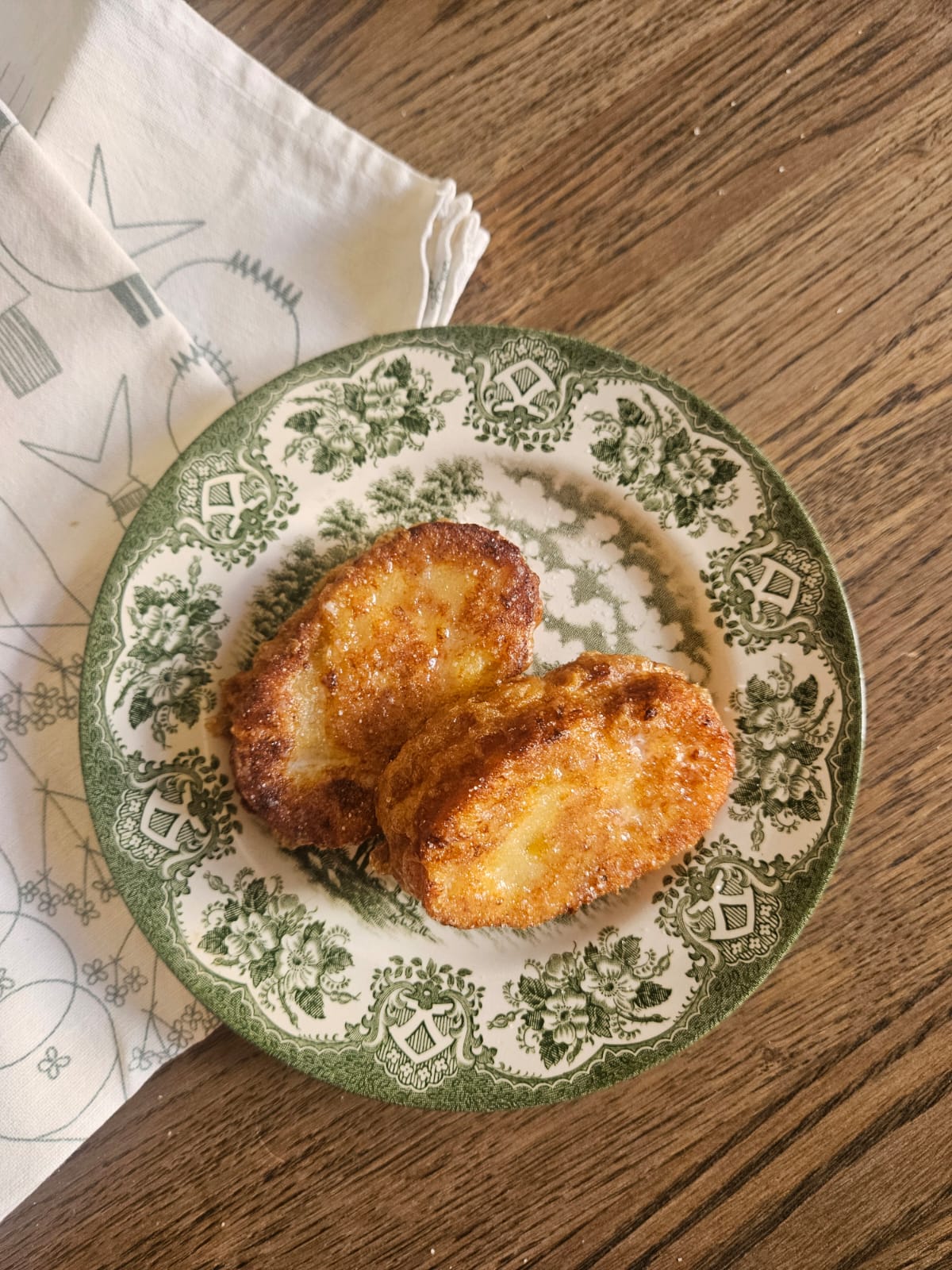
Torrijas: Spain’s Semana Santa Indulgence
Imagine rescuing yesterday’s stale loaf of bread with a splash of milk (or a wink of wine), a quick egg bath, followed by another one in hot oil until each slice is bronzed and crackly at the edges, custardy and yielding inside. You have just made torrijas, a beloved Spanish sweet – simple in concept, rich in cultural meaning. Often described as Spain’s take on French pain perdu or English bread pudding, they are most closely associated with Lent and Holy Week, when households and bakeries across Spain revive this resourceful dessert, making it a beloved Semana Santa indulgence.
A humble dish elevated by tradition
Torrijas may sound humble because they sprang from necessity, born in kitchens that had to stretch every crumb and avoid wasting food. The Roman gourmand, Marcus Gavius ??Apicius, recorded the first known reference to a soaked sweet bread in the 1st century. As El País explains, however, the Spanish name “torrejas” was only formally recorded in the 17th century, by the royal chef Francisco Martínez Montiño.
During Semana Santa, people spend hours in processions and church services, and need sustenance that won’t crumble under piety. Torrijas tick that box. Simple pantry staples, easy to make in large batches, and delicious enough to lift spirits (and sugar levels) during long, solemn days. Bakers, families, and religious brotherhoods would fry them up by the dozen. So, long before Instagram chefs made them fancy, torrijas were the original comfort food for the budget-conscious and later the devout.
Think of torrijas as bread’s redemption arc- stale bread (the staler, the better—this is not the time for artisanal freshness), soaked in milk or wine (the classic debate: milky innocence vs. boozy bravado), dredged in egg, fried in olive oil, and finished with sugar, honey, or syrup. That’s it. Simple chemistry- moist interior, crisp exterior- and you´ll forgive the bread for ever going stale.
From Andalusian sherry to Valencian citrus
Regional variations abound. Madrid keeps it classic: milk, cinnamon, sugar. Andalusia gets boozy. Sherry or moscatel soak gives a pleasantly tipsy edge, as if the torrija had one too many at mass. Castilla y Lyon goes custardy, while Catalonia flirts with crema catalana flavors and Valencia with citrus notes. Modern chefs, never content with tradition, swap bread for brioche or challah and infuse the slices with coffee or plate them with ice cream.
If you’ve eaten pain perdu or bread pudding, you’ve met torrijas’ cousins. Pain perdu, also known as French toast, means “lost bread” and is the elegant ancestor of torrijas. Both rescue stale bread by soaking and frying, but pain perdu often uses richer bread (brioche) and is framed as a breakfast/brunch delicacy, lightly sweet, sometimes flambéed, rarely as saturated in syrup. Torrijas, by contrast, wear their indulgence proudly and are tied to a communal, seasonal ritual rather than brunch.
English bread pudding, traditionally served as a dessert, is the stoic, baked cousin. Soaked bread is mixed into a custard, baked, often studded with dried fruit, and served with cream or sauce. It’s denser, more homogenous in texture, and less about a crisp exterior. Torrijas hit a different texture note: crisp outside, tender inside, typically fried, not baked, and often simpler in flavour profile.
Where to find torrijas in Valencia
So this Holy Week, give yourself permission to eat one (or three). If anyone asks, tell them it’s restorative. Tradition says so. Here are some suggestions:
- Panou is a casual eatery, dedicated to take-away torrijas. This Spanish franchise has a branch in the Eixample neighborhood.
- Quesomentero near the Ayuntamiento, is actually a cheese specialist, but it makes my favorite torrijas served with marcarpone.
- For posh versions of torrijas from Valencia’s Michelin-starred chef Ricard Camarena, both Bar X in Mercado Colon and Canalla Bistrot in Ruzafa have it on their dessert menus.
- Mercadona does a seasonal offering of frozen torrijas that’s popular and easy to prepare.
You can also try making your own this weekend. ABC has a lighter version that bakes the bread after soaking it in lemon and cinnamon-infused milk.
