Easter by the Sea: The Most Beautiful Week in Valencia Nobody Talks About
You may be familiar with the unsettling images of Holy Week in Spain — penitents dressed in tall cone-shaped hats (called capirotes) that inevitably remind international audiences of darker chapters in history. In southern cities, some processions even include acts of self-flagellation, men walking barefoot through the streets in public displays of penance. Meanwhile, elsewhere in the world, Easter arrives wrapped in pastel colours: painted eggs, chicks, and cheerful bunnies hopping enthusiastically into spring. Yes, we don’t do marketing well.
And yet, this is precisely why I would like to show you the beauty of Semana Santa Marinera in Valencia.
Writing about the spirit of Holy Week can easily slip into the language of devotion, and that is not the intention here. Instead, allow me to approach it from a nostalgic and cultural perspective — one that does not urge anyone toward baptismal waters, but simply invites curiosity.
I come from a seaside town myself, and my memories of Holy Week are among those dearest to me: people waving palm leaves, the scent of incense, the singing of psalms, the intense afternoon light filtering through the tall stained glass windows. Above all, I remember joy. And this is precisely the atmosphere you will find in Valencia in comparison to other regions of Spain.
There are, of course, moments of sober quiet and reflection. For curious visitors, the traditional vestas (penitents) can still be seen on Good Friday; they do make for a solemn, impressive presence, but without the theatrical displays of suffering.
A Celebration Born from the Sea
These are the key moments of the holiday that I truly recommend you watch and participate in from a respectful distance, if you are not a believer. This is not Fallas — these are days for both introspection and sincere celebration. Here is where to be and when:
Thursday (Maundy Thursday) — All four maritime parishes, afternoon/evening. The Visita a los Monumentos brings all the brotherhoods together in a thunderous procession that visits every parish. This night is also known as La Nit de les Capelles — the Night of the Chapels — because of the tradition of visiting the private homes that house the sacred images. Wander through Cabanyal and peek through open doors — you might find a baroque crucifix in someone’s living room.
Friday (Good Friday) morning — The beach, Cabanyal. One of the most breathtaking images of the whole week. The Christ figures are carried down to the shore, where a prayer is offered in memory of sailors lost at sea, while the Biblical character representing the Sorrowful Mother places flowers on the waves. Get there early and stand close to the waterline.
Friday (Good Friday) — Streets of Poblats Marítims, all day. The day begins with the Via Crucis and ends with the Procession of the Holy Burial, in which all brotherhoods participate with their beautifully decorated floats. This is the most solemn and emotionally charged procession of the week.
Saturday night into Sunday (Noche de Gloria) — Balconies of the Cabanyal, midnight. Fireworks light up the sky while from the balconies, crockery and water are thrown into the street in the trencà dels perols — the breaking of the pots. A symbol of out with the old, in with the new.
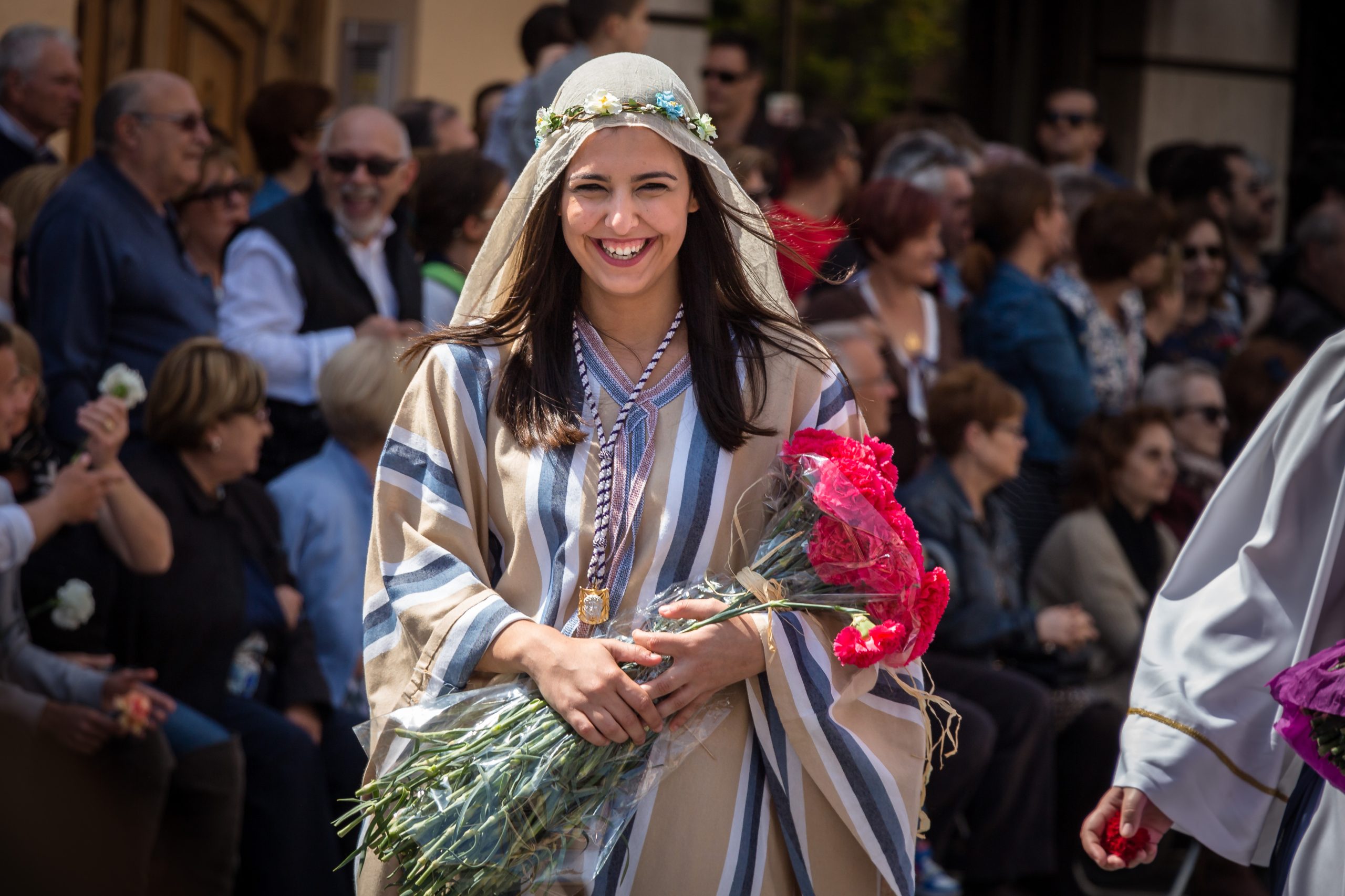
Sunday (Easter Sunday) — Streets of Poblats Marítims, midday. The Desfile de Resurrección explodes with joy, music, and colour at midday — the crowd, which had remained in respectful silence throughout the week’s processions, now greets the brotherhoods with applause and cheers, while the Biblical characters throw flowers back into the crowd. Keep an eye out for the Corporaciones — military groups in full historical costume representing different eras all marching together: Roman Praetorians, Crusade-era Sayones, and Napoleonic French Grenadiers. History and spectacle combined. The mood shift from Friday to Sunday has to be experienced to be believed.
Sunday finale — Plaza de la Cruz. After the Resurrection parade, visitors can head to Plaza de la Cruz, where members of the Hermandad del Santo Sepulcro wrap themselves around their banner and then unwind — symbolising that the festival has ended, and the next one has already begun. A beautifully poetic full stop to the week.
I truly believe that in a world obsessed with the individual and the relentless encouragement of material narcissism, there is something quietly radical about standing in a narrow street of a small seaside neighborhood of Valencia and making room for something that has nothing to do with you — and everything to do with the people standing next to you. Let the beauty of it in.