Esmorzaret: Valencia’s Mid-Morning Meal Tradition Explained
If you think breakfast is solemn and lunch inevitable, let me introduce you to the Valencian “esmorzaret”— or “almuerzo” if you prefer the Spanish label. It’s that unapologetically indulgent mid-morning break, where coffee sometimes arrives with a cheeky splash of booze, sandwiches are treated like matters of state, and everyone agrees — for at least twenty glorious minutes — that productivity can wait.
The origins: from fields to bars
The almuerzo started the way many sensible Valencian things do — out in the fields of l’Horta, where early starts were normal, and lunch came late. Farmworkers needed a proper
mid-morning meal to keep them going. So, they built a short, robust ritual around simple, nourishing ingredients like bread, cured meats, and eggs that could vary by season and pocket.
Over time, the almuerzo migrated from fields to factories, and then to bars, gradually outgrowing its purely utilitarian origins and acquiring a social polish that has become an institution in Valencian life (practically a religion, according to this excellent guide from El Pais).
Today, you’ll find construction workers, office teams, shopkeepers, and retired neighbors all claiming their version of the almuerzo as essential.
Classic esmorzaret menus
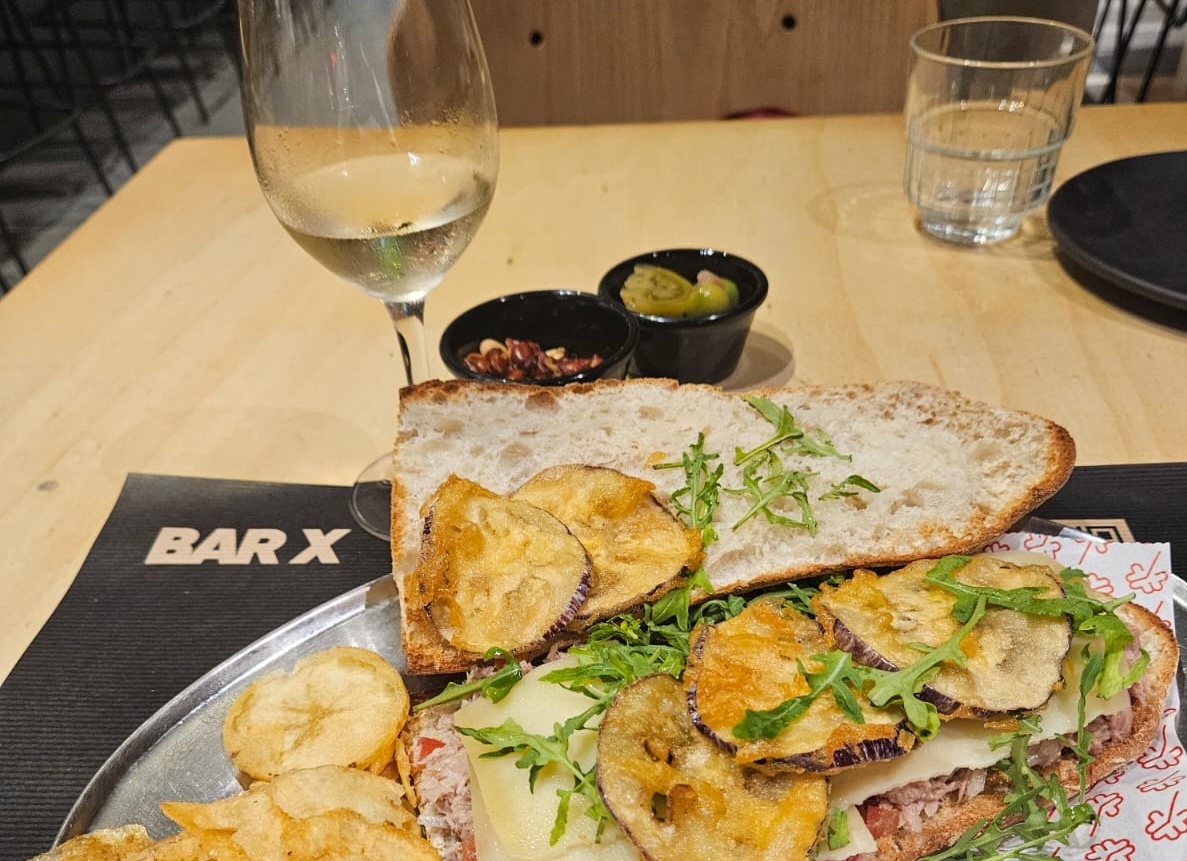
Every ritual has rules, and the esmorzaret is no exception. It should start with a drink — beer, wine, or soda will do — followed by the gastos (the snacks consisting of olives and peanuts), and finish with a cremaet (coffee flambéed with a splash of liqueur). The star, naturally, is the bocadillo: the sandwich.
Once frugal, now sometimes dressed up by chefs — yes, there are gourmet bocadillos — but the classics hold their ground. Some favorites:
- Chivito: a stacked sandwich of pork loin, bacon, cheese, mayo, lettuce, tomato, and fried egg. One bite and you understand why it’s popular.
- Negra y Blanca: a pair of sausages, black morcilla and white longaniza, usually served with broad beans and onions. Comfort with attitude.
- Almussafes: named for a town south of the Albufera, this one pairs sobrasada with cheese and caramelized onion. Simple and very good.
- Brascada: beef and jamón ibérico with caramelized onion. For people who mean business.
- Caballo: a sandwich containing horse meat, still offered in some places, and a genuine local curiosity for adventurous eaters.
Chefs have also taken the bocadillo into new territories: fried aubergine with shaved parmesan, housemade pates, or plant-based versions for the more modern bar counters. But most neighborhood bars will offer a variety of ingredients on display, giving customers the opportunity to customize their bocadillo.
Esmorzaret etiquette
There are a few unspoken rules. Don’t rush someone savoring a bocadillo. Don’t sneer at another person’s filling. Tastes are personal and fiercely defended. And a true esmorzaret? It happens between roughly 9:00 and 12:00. Anything outside that time window, and you’re not having an almuerzo, you’re just … eating.
So if you’re in Valencia mid-morning and someone invites you to an almuerzo, say yes! Order boldly and take the time to be a little less productive and a lot more human.
Need help choosing an almuerzo place? My personal favorites are all in Russafa: La Chata, La Cantina, and for some of the largest bocadillos, La Bien Parida de Ruzafa.
Want to learn more about almuerzo? La Cultura Del Almuerzo by Paco Alonso is dedicated to the art of almuerzo.