Counting Churros: The Hidden Economy of Street Businesses During Fallas
Money Talks and Reflections in Valencia
As the week came to an end, I realized that one topic kept resurfacing around me — in personal conversations, online threads and open forums: money expectations in Valencia. People from all these sources were trying to make sense of what a fair salary should look like, and the answers, unfortunately, tended to be lower than many expected. Even allowing for some variation between regions, it is no secret that salaries here are modest when compared with the United States or northern European countries — often balanced, as locals like to point out, by fantastic weather and a lifestyle that is hard to beat.
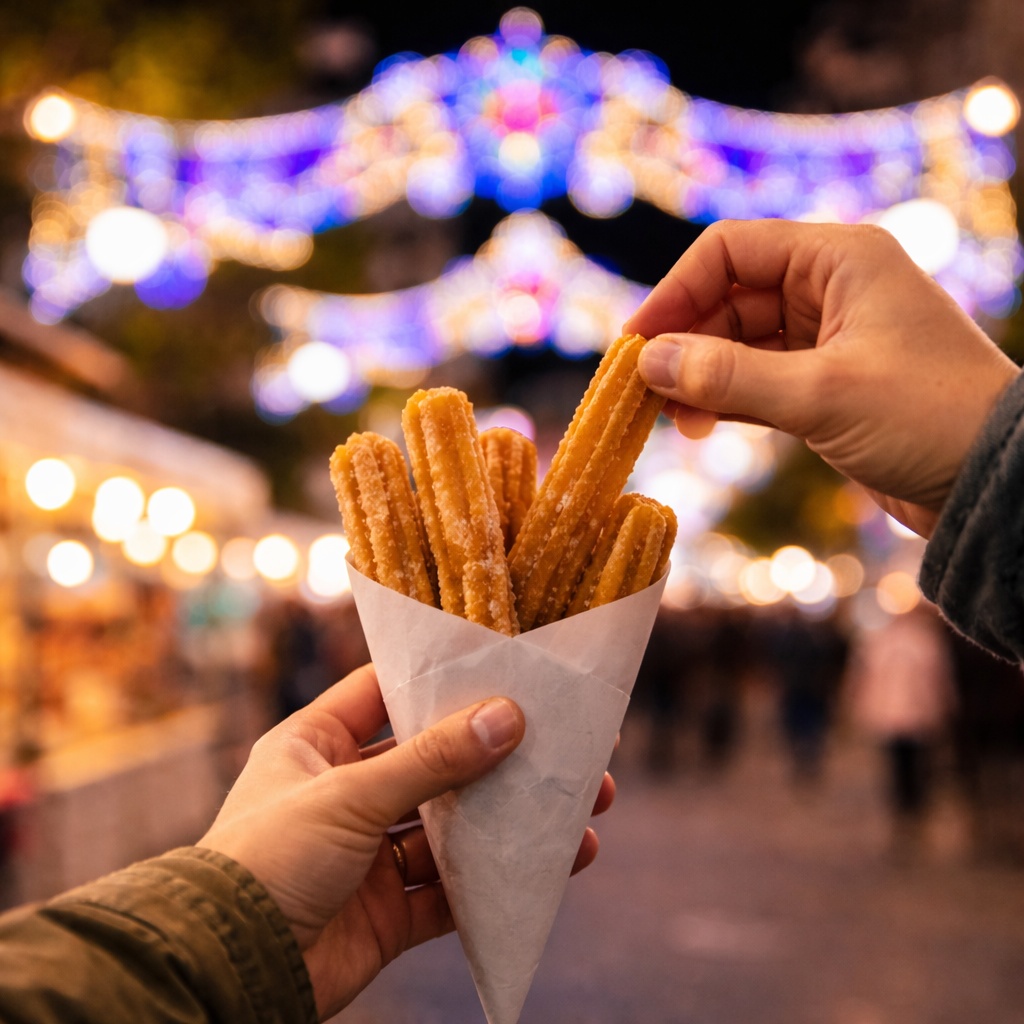
In parallel, the countdown to Fallas is moving steadily toward its inevitable zenith. Not only have churros and porras stands begun popping up across the city like mushrooms after the rain, but within a matter of days the city seems to double its commercial surface. Portable fryers arrive on quiet corners. Firecracker stands open near parks and other high-transit areas.
As I tried to navigate the chaos of closed streets — past newly opened kiosks, temporary stands, lighting installations and the early stages of the falla constructions — one question kept returning to mind. If salaries here are indeed modest, how do all these temporary businesses make sense? And how do the people behind them survive financially?
The answer, it turns out, is more interesting than one might expect.
Today, we talk numbers.
The Economics of Churros
The first answer lies in permits. For Fallas 2026, the Valencia City Council authorized 146 churro stands across the city. These temporary businesses operate under special licences allowing them to set up in public space for seventeen days, from March 2 to March 19. The process starts months earlier: applications for these spots closed at the end of November 2025, and the permits are typically requested by falla commissions, which must present the documentation of the vendor running the stall. Once approved, the stands operate under municipal supervision and must comply with regular sanitary and police inspections.
And while exact figures are rarely public, a rough calculation reveals the scale of the festival economy. With churros typically selling for around €6–€7 per dozen, a busy stand selling a few hundred portions a day could bring in between €600 and €2,000 daily. Over the seventeen days of Fallas, that could mean well over €10,000 in revenue for a single stall, and significantly more in the busiest locations. Multiply that by 146 licensed stands across the city, and suddenly the humble churro begins to look like serious business.
And churros are only the beginning.
The Hidden Street Economy of Fallas
According to recent reports from local media and festival organizers, Valencia has about 384–397 fallas commissions depending on the year. Across the city, many falla commissions also set up small temporary markets selling artisan goods, sweets, drinks, or prepared food. With nearly 400 fallas operating across Valencia, these pop-up markets multiply quickly. If we take the data on churros as a reference, even by conservative estimates, the temporary street economy created during Fallas can easily move several million euros in just a few weeks.
Add to that the crews setting up tents, sound systems, portable bars, and street stages. For a few intense weeks, the festival transforms entire neighbourhoods into a temporary street economy — one built from folding tables, portable kitchens and improvised bars, extending far beyond the stalls we see on the corners.
Fallas definitely creates a brief but powerful window of opportunity. For a few intense weeks, a temporary street economy takes over the city, allowing small vendors, seasonal workers, and neighbourhood associations to make the most of a brief surge of life and commerce that simply doesn’t exist during the rest of the year.
