The Weekend Plan: History, Hills & Almuerzo in Sagunt
This week we recommend getting out of town. It’s going to be a busy day downtown, so heading towards calmer areas might be the best plan. This was one of the first trips we made when we moved here, and it remains one of our favourites.
If you have a car, it’s about a 25-minute drive from Valencia — but I truly recommend doing it by train. It adds so much to the experience, especially for the kids. It’s cheap, reliable, and completely stress-free. Parking there can test your patience, and the views of the Valencian fields along the way are worth a picture or two.
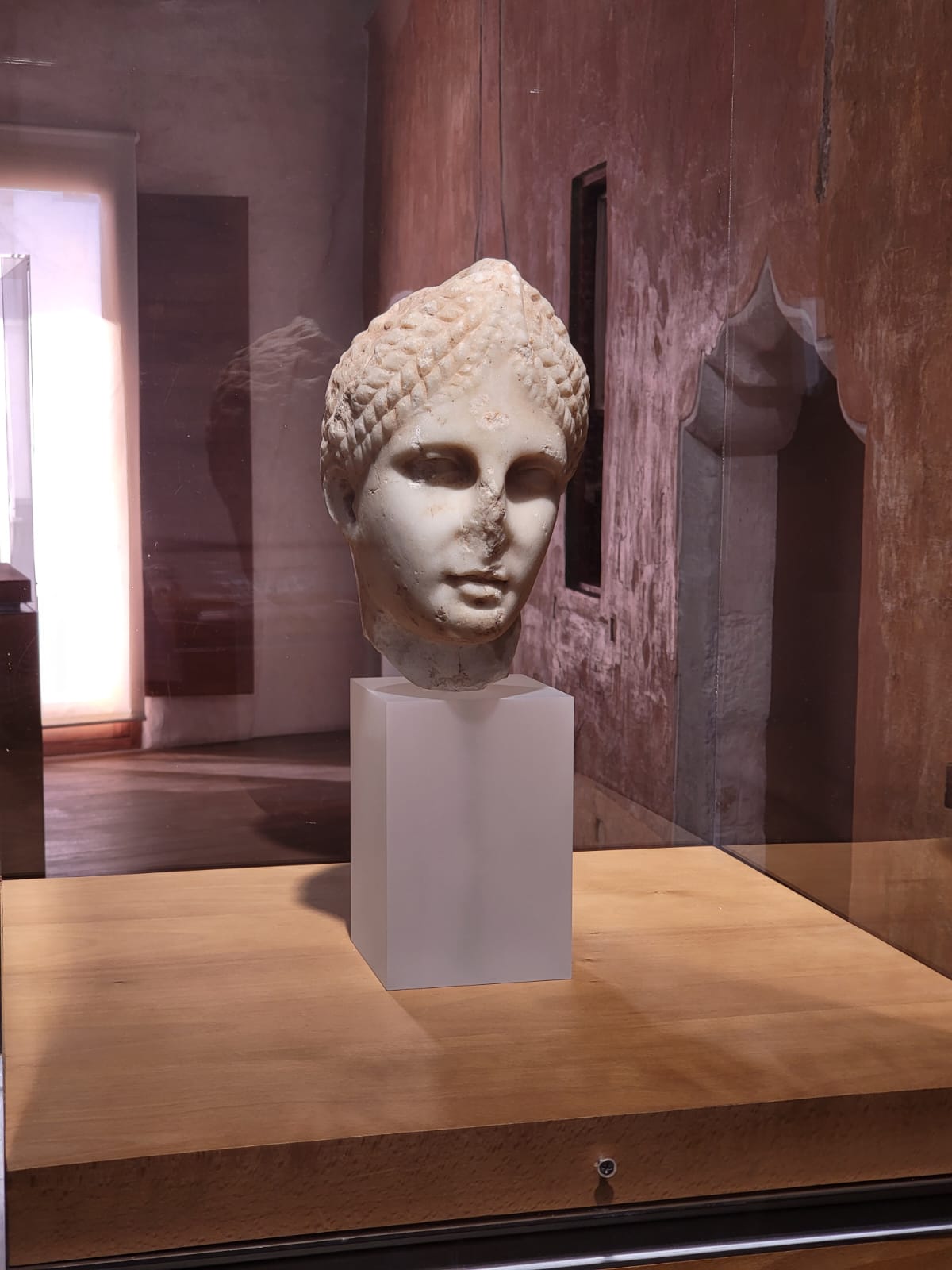
As you arrive in town, head first to the Museo Histórico de Sagunto. Located in the old Jewish quarter (La Judería), this small museum offers a chronological journey through the town’s layered past — Iberian, Roman, medieval, and beyond. You’ll find inscriptions, sculptures, ceramics, everyday objects, and fragments that quietly tell the story of Saguntum’s strategic importance through the centuries. It’s not overwhelming in size (a blessing with children), but it gives just enough context to understand where you are standing — a town that has been fought over, rebuilt, and inhabited for more than two thousand years.
Just a few minutes’ walk away is the Espai Arqueològic Via del Pòrtic, a separate but complementary visit. Here you step directly over Roman remains discovered in 2004. Through glass walkways, you can see part of the original Roman road that once connected Saguntum with Valentia, along with drainage systems and the foundations of houses dating from the 1st to 3rd centuries AD. It’s compact, visual, and surprisingly engaging — especially for children, who love the sensation of “walking above history.”
Both spaces are manageable, close to each other, and together create a gentle introduction before you begin climbing up toward the theatre. Remember they close at 14:00.
After that, begin the slow climb towards the Roman Theatre. It’s about a 10-minute walk, depending on the speed (and mood) of the little ones. But don’t despair — right before the entrance you’ll find a fantastic little bar, La Taverna de la Serp. This is the perfect stop for a traditional almuerzo or some tapas. It still holds that Spanish authenticity — simple, unpretentious, and exactly what you want before continuing uphill.
At the top, you’ll reach the Roman Theatre of Sagunto, originally built in the 1st century AD during the reign of Emperor Augustus. Carved directly into the hillside, it once seated around 8,000 spectators. Today it is partially restored and still used for cultural events and performances. Even if there’s nothing scheduled, the structure itself — overlooking the town and the sea in the distance — is impressive enough to justify the climb.
Sagunt is a historically rich town, layered with Iberian, Roman, Jewish, and medieval heritage. If you have time, there are other interesting sights to explore: Plaza del Ayuntamiento, the Castell de Sagunt stretching dramatically across the hilltop, the remains of the Roman Circus (one of the largest in Spain), and the old Jewish quarter and cemetery.
If you don’t manage to see it all — and most probably you won’t — that’s actually good news. It simply means you’ll have a reason to return. In the meantime, don’t miss the opportunity to wander, get slightly lost, and let the narrow streets guide you through this beautifully preserved historical town.