When Do Spanish Kids Go to Bed?
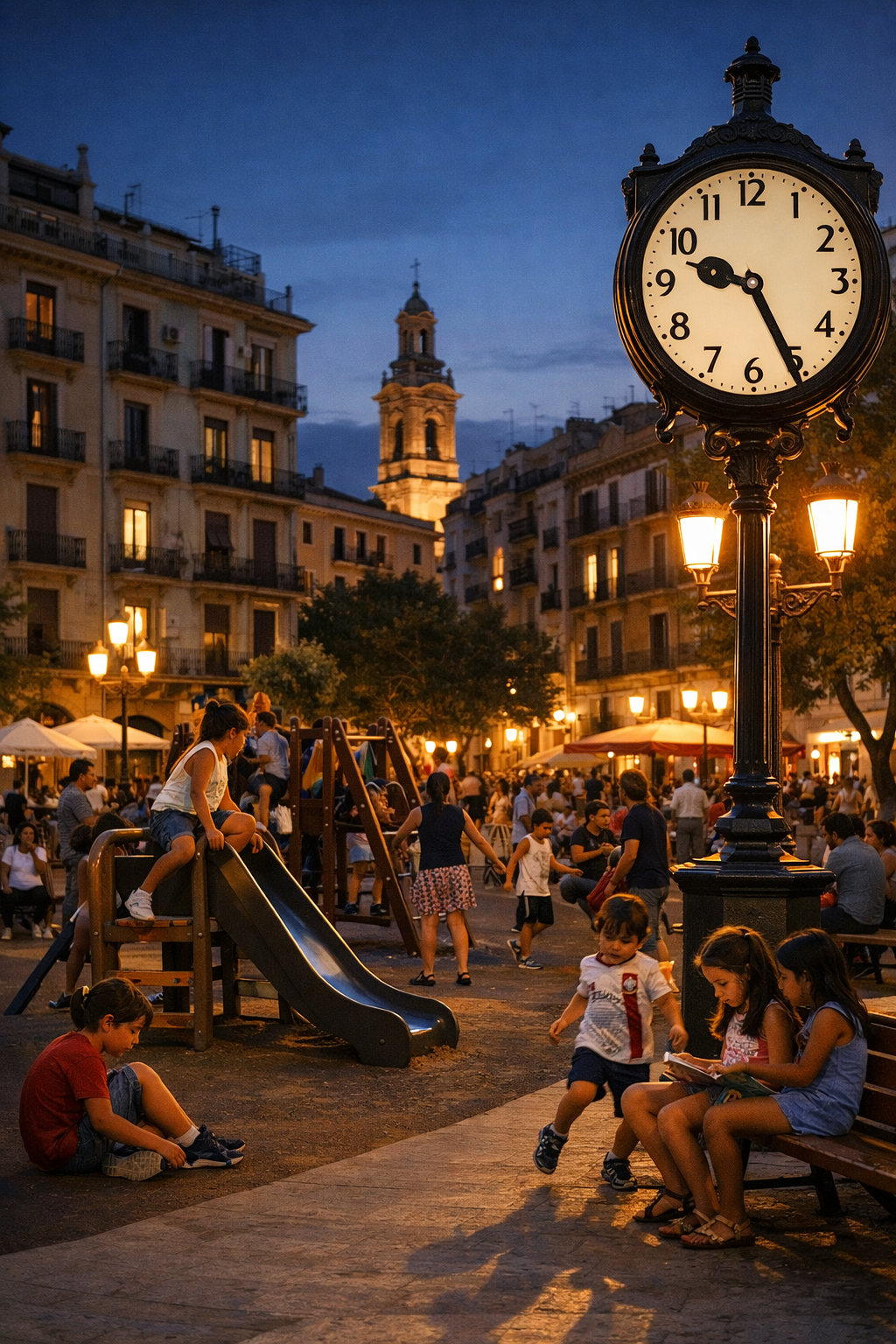
Even after years of living in Spain, many parents still pause at the same sight: children playing in the street well past 7 p.m. For newcomers, this is often filed under the familiar label of “Spanish time.” Life starts late here, and it stretches comfortably into the evening. What looks chaotic from the outside, however, is in fact a system that makes perfect sense once you understand its rhythm.
Most Spanish schools begin between 9:00 and 9:15 a.m. The majority of children attend public schools located close to home, which quietly removes one of the biggest stressors of the day: commuting. A 7:30 wake-up is generous. Arriving at the school gates around 8:40, you’ll often find a calm, almost empty playground. Children start trickling in closer to 8:55. There’s no urgency — school isn’t going anywhere. It’s a small but telling example of how the country as a whole approaches time.
School finishes between 4 and 5 p.m., and that return home coincides with merienda. This isn’t a light snack grabbed on the go; it’s a proper pause in the day. As a result, dinner naturally shifts later, usually between 9:00 and 9:30 p.m. This is also why early restaurant reservations are so elusive — Spanish families simply aren’t ready to eat. Even in cities like Valencia, where siesta feels more symbolic than literal, the structure remains: rest, coffee, merienda, then the evening unfolds.
From 5 to 7 p.m., unless there are extracurricular activities, children reclaim the outdoors. Playgrounds fill, scooters reappear, and the day is physically shaken off. There’s still time afterward for homework, a bath, dinner — and bedtime around 10:30 p.m.
By Northern European standards, this may sound late. But Spanish families believe children sleep well, and they sleep enough. Ten-thirty is not considered excessive; it’s simply aligned with the day they’ve lived. Weekends and holidays, of course, follow a different logic. Midnight becomes the unofficial bedtime, and mornings adjust accordingly — which is why family plans and children’s activities often don’t begin until 11:00 a.m.
In Spain, bedtime isn’t just about the clock. It’s about the tempo of the day — and once you learn to follow it, it starts to feel surprisingly natural.