A City of Saints: Understanding the Valencians’ Religious Holidays.
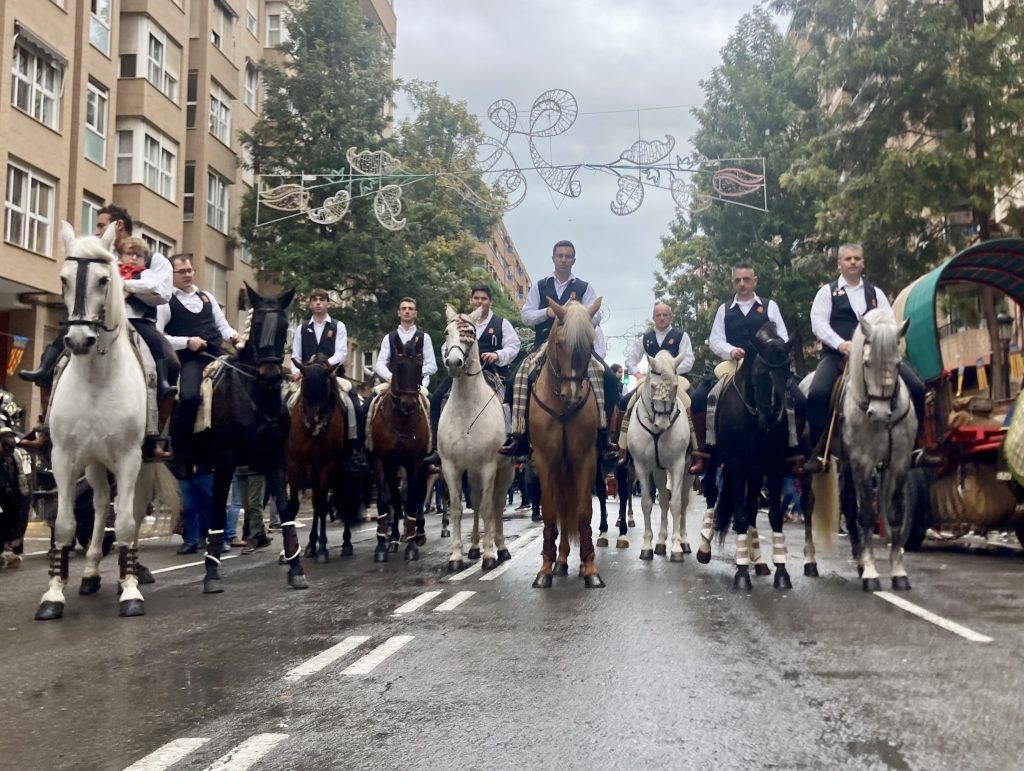
This month, Valencia is celebrating two important religious festivities that are intrinsic to the town’s identity: San Antoni Abad and Saint Vincent. You may have seen billboards around town, your kids are getting a day or two off from school, and even here at Pont de Valencia we’ve highlighted them as major events — partly because they may cause traffic disruptions, but also because they bring interesting parades and moments worth noticing, especially for the curious foreign eye.
If this isn’t your first year here, you already know these are recurring events — not only this month’s, but throughout the year. In fact, if you look at the Spanish calendar of holidays, a great deal of them are of religious origin. There’s even a Spanish expression that alludes to “the eleven thousand virgins” (las once mil vírgenes), which we use in all kinds of situations: as a desperate call for help, to describe a doomed enterprise beyond saving… the point being, we are well aware that we have many saints and virgins to pray to. There is, quite literally, a saint for every day of the calendar.
Not too long ago, naming a newborn wasn’t something parents pondered much: children were simply given the name of the patron saint of the day they were born. This practice has mostly disappeared, but you may still encounter it among more traditional (and often larger) families. That’s how you meet a María del Carmen or María del Pilar — and instantly know which saint the family most likely holds a particular devotion to.
To the modern foreign eye, this peculiarity can feel puzzling but picturesque, especially when you don’t actually see your neighbors attending mass or joining the parades on those “special” days. So the question arises: do we really need to close schools and businesses for celebrations that don’t seem to resonate with the entire population?
Ah, there’s the rub. It turns out that some saints are VIP — and others are… well, premium.
Let’s take Saint Antoni, celebrated on January 17th. This beloved festivity is very popular in Valencia. The brotherhood was established in 1333, and while it was celebrated very differently back then (by medieval standards), it was even completely forgotten for a time, until it was revived in 1952. Still, animals have always been at the heart of the celebration. Saint Antoni is the protector of all furry friends — and who dares not love animals?
According to la hermandad, the parade attracts at least 13,000 visitors, not only to watch but also to receive a blessing for their pets. The procession is genuinely enchanting and emotional, and especially popular among families — again… animals. The celebration also includes other important events, such as a major animal food collection that is later distributed among city shelters.
Now let’s look at Saint Vincent Martyr, celebrated this week on the 22nd — not to be confused with Saint Vincent Ferrer, another major celebration in town that takes place later, around Easter. They are two different people, separated by a thousand years and by a rather dramatic difference in life experience (Martyr was brutally tortured).
Here comes the mind-blowing part: Saint Vincent Martyr is the patron saint of the city of Valencia, while Saint Vincent Ferrer is the patron of the Valencian Community. That’s why, on the 22nd, the city of Valencia shuts down completely, while nearby towns like Picassent or Silla continue business as usual.
So don’t be surprised when you hear we’re celebrating Saint Vincent again — it’s just a different one. This time, a Valencian-born saint. Even though Martyr wasn’t originally from Valencia, his trial and martyrdom took place here, and his post-mortem miracles sealed the deal. Making him the city’s patron felt like the least we could do.
Still, what ultimately determines which religious celebrations carry more weight is, quite simply, politics.
Spain is a deeply fragmented country; We are a collection of cultures loosely held together with what sometimes feels like low-quality adhesive. While other countries may be struggling with nationalism, we have a smaller — yet bigger — problem: regionalism. We may not have a clear idea of who we are as a country, but there is a strong consensus on what it means to be Valencian, Andalusian, Basque, or Galician.
Anything that reinforces local or regional identity becomes a useful political tool — strengthening domestic power, but also widening the fault lines that strain the country as a whole. Saints tied closely to a region’s identity naturally rise in importance, and public holidays often function less as expressions of religious fervor and more as masked affirmations of political and cultural belonging.
So who actually attends these celebrations? It depends.
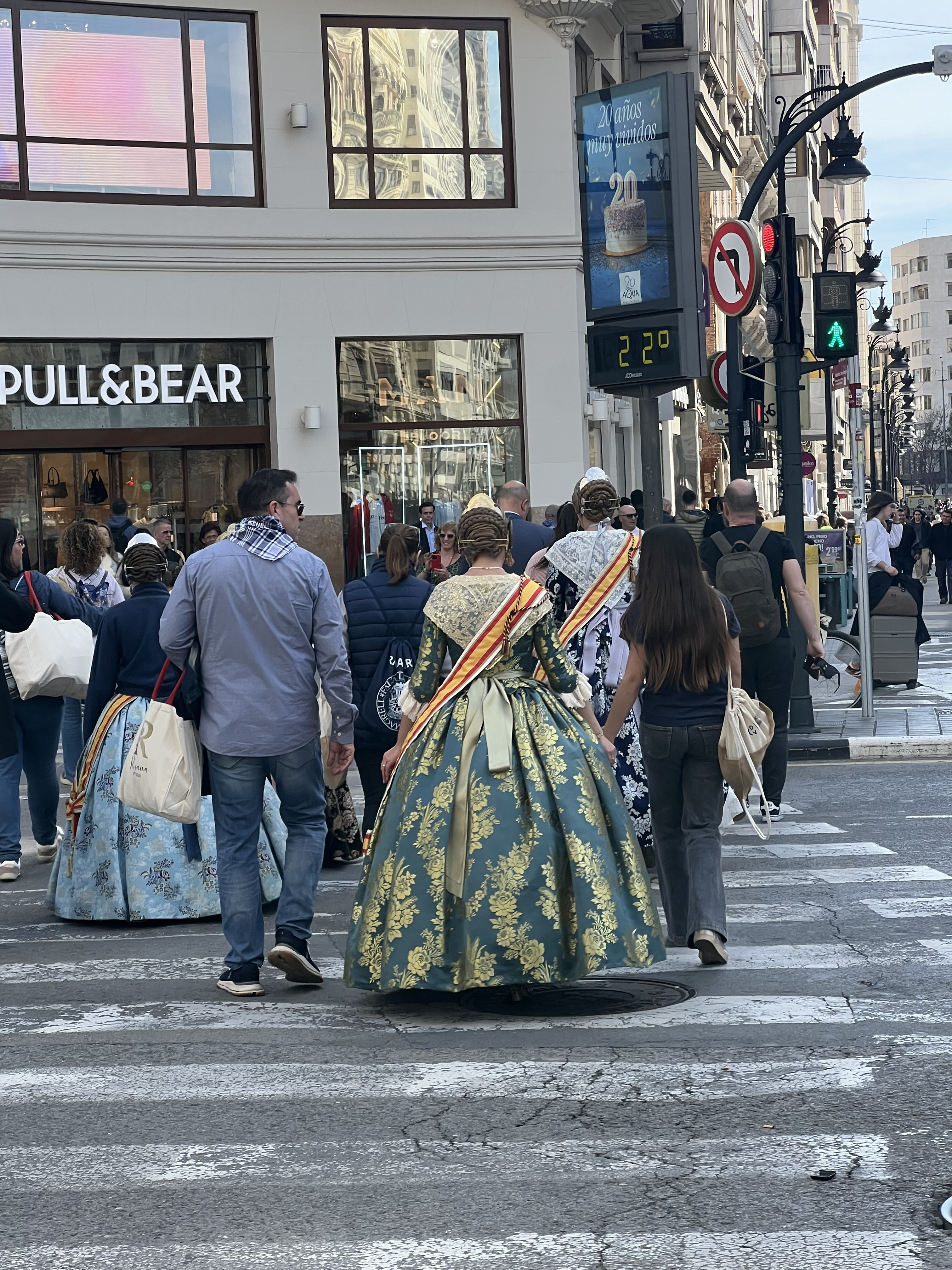
Saint Antoni draws families, animal lovers, and the elderly — many out of genuine devotion or tradition. Saint Vincent (both of them) brings out the big machinery: falleros y falleras, political figures at every level, larger budgets, fuller programs, more attendees, more curious tourists, and more media coverage. You can already see how it snowballs.
I was raised Catholic — I believe I’ve mentioned that before — but I long ago signed off from the Church’s religious fanfare. Still, I’ve kept some form of faith, in a rather Emersonian way. I experience these holidays with a mix of fascination and detachment, especially after spending so many years away. They don’t speak to me culturally anymore. I have no ties to a falla or similar traditions; at most, there’s a faint echo of some distant school activity — the key word being distant.
My family is by no means conservative or inclined toward public displays of devotion. What’s left for me, then, is simply a day off. If I can avoid working, I’ll take my family away from the crowds. If not, strategic calculations must be made to manage the children.
And that, quite honestly, is how most Spaniards will experience these days.